Showing posts with label Hollyhock. Show all posts

Monday, July 18, 2011

Bugs Be Gone!


In an effort to use fewer chemicals in all aspects of gardening, I have been testing two natural bug repellents. Repel Lemon Eucalyptus insect repellent spray (for skin and clothing), and Bug Band insect repellent band (which you can wear on your wrist, ankle, belt loop), both sold by REI for $9, and $5, respectively. So far, I’ve had good results, with no bites; but not without noticing strong smells.

Both of these products utilize plant derived repellents. The Lemon Eucalyptus is a natural bug repellent that I could only find at REI, after reading lots of promising research data on-line. The bug band uses Geraniol, derived from Geranium, which is a fairly common ‘natural’ bug repellent ingredient.

Lemon Eucalyptus is touted to be as effective as DEET for a short periods of time. Once applied, the odor is more pleasant than DEET, but still quite pungent. The bug band also has an odor, not as pleasant as the eucalyptus spray, but not as strong either. The advantage to the band is that can be removed easily, though traces of the scent linger. (I've been wearing the band around a belt loop.)

As someone who works outside frequently, I take the health risks posed by ticks and mosquitoes very seriously. At the same time, I want to limit my exposure to chemicals, like DEET, which may affect the nervous system. These plant-based options seem to be a good balance between effectiveness and healthfulness.

The photo is one of my Hollyhocks, which have been in bloom for several weeks now.

Tuesday, August 17, 2010

guarding my garden!


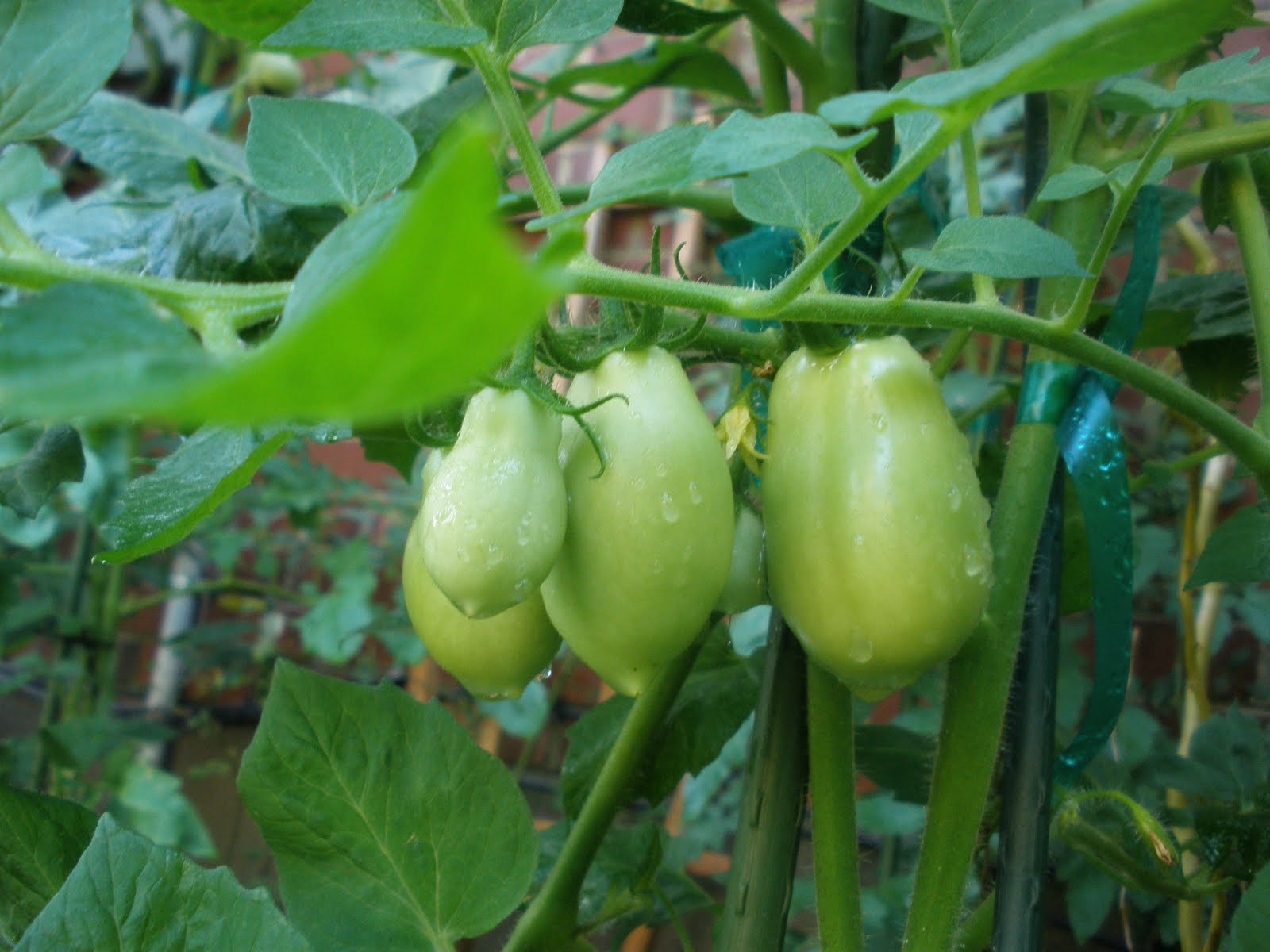
Despite the 4’ tall mesh fencing, some critter/person is still nabbing all of my ripe Roma and Big Boy tomatoes, and stomping all over my Sedum in the process. For whatever reason, the Black Cherry’s have remained safe, and I’m hoping Mr. Stripey will look so strange to the tomato thief that those will be passed by as well.

I think I reached the peak of exasperation last week when once again we realized we had been had; without sign of a struggle with the fence or remnants of the ill-gotten treasure, it was gone without a trace. I became convinced that stealing someone’s vegetables was the lowest form of larceny, and began devising plans for video surveillance of the garden.

Maybe garden surveillance is a bit extreme, but short of that I'm running out of options. The 'Roma' and 'Big Boy' are still growing so much and I'm hopeful that I will be able to harvest just a few more this season. They are growing so much in fact that I had to use the nearby Butterfly Bush branches for support!

It is extremely frustrating to not be able to enjoy the proverbial ‘fruit’ of my labor, and equally frustrating that I’m not able to share with friends and neighbors. On a positive note, I have discovered that grilling cherry tomatoes is absolutely fabulous. We now put them on skewers with other chopped veggies and they have such a great flavor!

The basil is kicking it up a notch and the Rose of Sharon has really hit its stride too. My peppers have slowed down, and I finally cut back the Baptisia. Thankfully, I was able to collect some Hollyhock seeds before I cut them back to the ground; I’ll start those in the greenhouse this fall.

I have especially enjoyed watching the Monarch butterflies flutter around the Butterfly Bush lately. To watch them float around the lilac blooms is like witnessing an ethereal dance that defies gravity. Their elegant movements will mesmerize any visitor to the garden. These are truly amazing animals and I feel honored to host them on their migration.

Tuesday, July 13, 2010

le jardin de pizza


It has been 3 weeks since my last blog post and all I can say is I’ve been busy; and so has my garden. Last night we made a pizza using homegrown Roma tomatoes, basil, and bell peppers. It was so delicious, it has inspired this ‘pizza garden’ blog!

Part of the reason I have been too busy to blog was that I read 'My Life in France' in record time for my first book club meeting. Julia Child's book was absolutely delightful in every way; I felt as though I was travelling and eating all over France with her, ergo the blog's title. [Pizza, however, was not a part of her French culinary escapades.]

Pizza gardens are gardens that simply contain the ingredients one may want to put on a pizza. Looking into it, I found that ‘pizza gardens’ all usually contain at least tomatoes and basil. The rest of the ingredients/plants could include sweet peppers, hot peppers, oregano, onions, parsley, eggplant, scallions, rosemary, jalapeños, cilantro, spinach, etc.

This theme could be wildly popular with kids too; picture a raised vegetable/herb garden actually in the shape of a pizza pie, with dividers made to look like ‘slices’ of pizza! It was a lot of fun enjoying the ‘fruits’ of my vegetable garden labor. And as the Roma’s continue to ripen and the garden yields more peppers, I hope to try another pizza soon!

There are ‘Black Cherry’ tomatoes ripening everyday, from the bottom of the plant upward. That tomato plant is now almost 7’ tall. I also harvested my first ‘Big Boy’ tomato over the weekend and will be trying that soon. ‘Big Boy’ only has a few more tomatoes ripening so I’m a little disappointed in its yield.

‘Mr. Stripey’ has yet to produce any fruit, but I am hopeful as it continues to grow and flower. The other no-name tomatoes are still growing, but remain fruitless as well. The jalapeño plant is producing lots, though I have yet to actually try one. And the red bell pepper is growing like a weed, but hasn’t set fruit yet.

The Black-eyed Susan’s are blooming profusely, and look great next to the sedums which are finally flowering. The butterfly bush and Verbena are flowering nicely as well. Although I was surprised that the butterfly bush I relocated across the drive has a lighter bloom color, almost a soft pink/purple as opposed to the lilac of the parent plant.

The Rose of Sharon are starting to bloom more, but are darker in color than I was expecting. Now, the blooms are lilac with a darker, magenta eye. The hollyhocks have completely petered out and I see no signs of seed pods so I’ll be cutting them all back soon.

The mint is almost taking over that planting bed, but it is nice to smell. The evening primrose is still blooming, and its fragrance is light and lovely in the evenings. We’ve received plenty of rain lately, so I’ve been able to cut back on watering. Also, our mid-to-upper 90 degree days have cooled slightly. Until next time, happy gardening!

the image used above is not my creation, instead i found it here.

Tuesday, June 22, 2010

Cooper, my garden companion


Whenever I garden, my trusty watch dog is looking out for me. At the top of our hill, Cooper sits and keeps watch over the goings on of the street below. Now he may be simply looking for squirrels to chase, but I think he is genuinely looking out for me and our homestead while I am busy gardening away.

He sits there, at attention, sometimes for hours. And he always resumes his post in the exact same spot. Occasionally, he will take advantage of my inattentiveness to slip off and play with the neighborhood dogs or chase squirrels. For the most part though, he is my constant garden companion and watch dog.

I was pleased to discover a plant that I thought might be a ‘weed’, turned out to be garden phlox (Phlox paniculata). I had kept several of this tall plant with strap-like leaves in the hope it was something worth keeping and I’m really glad I did. They bloomed bright fuchsia this week, and after passing the ‘phlox test,’ I knew I had something special.

What is the ‘phlox test?’ I believe Dr. Alan Armitage taught me this, but I’m not totally sure. Basically, if you pull the flower petals out of the stem and they remain as one flower unit instead of separate petals, than you have a phlox. Seems elementary (and it is) but I have found this technique very useful in plant identification. After all, there are hundreds of phlox species ranging from groundcovers to 4’ tall perennials, and a wide variety of flower color.

Bright fuchsia is not a color I would have ever picked for my garden, but I love it. It’s so vivid and eye-catching. This phlox is supposed to bloom throughout the summer and into the fall. We’ll see how it looks with the other summer blooming flowers…

The tomatoes and herbs are doing well. The Black Cherry’s are the first tomatoes to start turning a reddish color. My singular jalapeño fell off the plant, so picked it up and may try it out soon in some cooking, despite it’s small size (about 1 ½” long). I need to fertilize the veggies again, maybe today. I try and fertilize a few times a week with a liquid fertilizer.

I’m still a little befuddled by the Hollyhocks and Rose of Sharon. The Hollyhocks bloomed well, but only bloomed white. And the Rose of Sharon (there are five plants in total) have had less than three blooms combined. I have neighbors with Rose of Sharon’s that are covered in blooms.

I have found many tips for improving my Hollyhocks next year, like pinching off new growth a few times before flower buds appear. And I can also conceive that since this is the first growing season the Rose of Sharon have been in the ground, maybe they are focusing more on foliage than flowers. Bottom line, these plants may just need more sunlight.

This is an unfortunate conclusion, because I have only one ‘full sun’ planting bed. And it’s getting very crowded as is. But alas, since these Hollyhocks and Rose of Sharon are so important to me, I’m sure I’ll be relocating some to the west side planting bed this fall.

Another Hollyhock issue that has developed is Hollyhock Rust (Puccinia malvacearum). This fungus is characterized by yellow-orange bumps throughout the leaves and stalks of the plant. At this point, there’s not much I can do except remove unsightly foliage.

In the fall I will be sure to cut back the Hollyhocks hard and destroy all foliage instead of composting. I may consider an early spring fungicide application as well as spread the plants out more to improve circulation.

My garden is on the cusp of having lots of blooms and veggies by the end of the month. I hope I can keep up with all of the watering until then. It’s been topping out in the mid-nineties here lately with rain showers few and far between.

Wednesday, June 16, 2010

tall tomatoes and such


Now my tomatoes are taller than me, 5'-5". Well Big Boy and Black Cherry are at least, with Roma (pictured) right behind. Mr. Stripey had a later start and I’ve even relocated him once so I’m not surprised his growth is dwarfed by the others. I may have to buy several more, larger stakes to secure the three larger tomatoes, which continue to reach for the heavens.

The three large tomato plants all have multiple baby tomatoes that grow larger and more numerous everyday. I need to prune out some of the excessive foliage and suckers ASAP. And, I have a baby jalapeño! So far, however, that’s my only pepper.

I won’t be posting photos of my herb pot anytime soon, it has seen better days. The thyme is doing great and the parsley is fine, the variegated basil even looks to be making a comeback. But the cilantro has ‘gone to seed’ and looking worse each day. I’m hoping I’ll be able to harvest some coriander, but I’m not holding my breath.

I have planted a new basil plant and hope to add others as I count more tomatoes everyday! The Rosemary is doing great and has probably doubled in size since I planted it earlier this year. And the mint is going gangbusters, taking over the driveway planting bed.

Also in the driveway planting bed, the last remaining Hollyhock flower buds are blooming. Still all white! And the Rose of Sharon (pictured) has begun to bloom! I have counted only two blooms so I’m hoping for more. It is one of my all-time favorite flowers; admittedly this may be because they remind me of my grandparents, but nonetheless, gorgeous.

Back across the drive, in the west side planting bed, the Black-eyed Susans have begun to bloom. They will look great alongside the pinkish reds of the sedums and daylilies close by. Along with the tiger lilies, the pink/red, orange, yellow combination is actually quite lovely.

Also, I have discovered that a beloved annual, Verbena bonariensis, has reseeded itself. While not the most ideal location (in the front of the flower border), it’s a welcome surprise! This annual has rose purple flower clusters at the end of slender square stems growing 4’ or more in height.

I prefer this plant in the back of the flower border, and often pinch it back a few times to induce a more compact habit. Once it starts blooming, you will have color on into the fall. Another benefit is this plant attracts butterflies and gold finches. The only downside is an occasional powdery mildew episode; if this occurs, I just cut back all affected foliage.

And finally, a favorite perennial planted on the bank at the rear property line, the evening primrose (Oenothera), has begun to bloom! I don’t know much about this plant, but I’m delighted that it seems to have spread and I now have at least twice as many plants as last year. [I believe it spreads by seed, because one popped up in a nearby pot.]

I’m amazed that this inconspicuous plant has thrived where it has, competing with the likes of ivy and euonymus. As the name suggests, swirls of buttery yellow blooms open up after the sun goes down. It’s great in combination with the tiger lily; especially since they both bloom at a height of 3-4’. The flowers are truly beautiful, and the perfect crescendo to a summer day.

Tuesday, June 8, 2010

baby tomatoes!


While replacing the tomato stakes last weekend, I discovered I had baby tomatoes! There are baby Roma’s, and Black Cherry tomatoes. Still no fruit on any of the pepper plants or Big Boy and Mr. Stripey, but all have flowers. I think I’m still on track to be harvesting the first tomatoes at the end of the month.

The status of the herb ‘garden’ is virtually unchanged. I did have an opportunity to use some mint in a recipe I tried last week, Jamie Oliver’s ‘mini shell pasta with a creamy smoked bacon and pea sauce’ from his book, Food Revolution. It turned out quite well, click here for a link the recipe.

The Hollyhocks are still blooming (all white) and while I get annoyed with the mint most of the time, it is nice to have something covering up the Hollyhock’s unsightly legs. Also in the driveway planting bed, there are many flower buds forming on the Rose of Sharons, and the butterfly bush and black eyed susan’s that I relocated to the driveway bed are also doing well.

Out front, the Hellebores still have flowers, and the Oakleaf Hydrangeas are doing so well. This seems to be a particularly good year for hydrangeas in our area. ‘Not of this World’ is the first of my Daylilies to bloom, and the tiger lilies are still going strong. In the west side planting bed, the sedum is also about to bloom.

I’ve only had to water a few times all season, thankfully; that has saved time and money. I’m still fertilizing the veggies and herbs once or twice a week with a liquid fertilizer, but that’s really the only maintenance I’ve had time for lately.

Friday, May 28, 2010

oh happy day


Well it’s happened; my hollyhocks have begun to bloom. This is a momentous occasion. Just think, twenty one months ago I was harvesting Hollyhock seed from the stand of flowers outside of THE Hollyhock house, and now I have my own stand of blooming Hollyhock flowers!

These flowers are descendents of the very flowers that Frank Lloyd Wright himself may have planted but certainly planned for and gazed upon. I feel like I have a small piece of exquisite American architectural history growing right here in my Nashville garden. It has been a long journey but totally worth it.

Right now, there are only two white flowers blooming, but I’m hoping that some other colors will show up soon. The flowers at the Hollyhock House ranged from pale pink to rosy-pink. I guess now I’ll research how they are pollinated so that I can have some more seeds to plant for next year.

I think packaging and selling seeds from the flowers at the Hollyhock House would be an amazing fund-raising opportunity for the Hollyhock House. If you’ve been there, you know they need every dollar they can get for restoration and maintenance. I think I’ll send them a note right now!

Thursday, May 27, 2010

bugs are gone!


The ant/aphid infestation on my Rose of Sharon is completely gone. And since spraying my hollyhocks with Sevin I haven’t seen any more hollyhock sawfly larvae chomping away. They still haven’t bloomed, but I’m hopefully every day when I come home from work to catch a glimpse of color.

Last weekend I removed a portion of my Black-eyed Susan’s in the west side planting bed to make room for two more pepper plants and give my rosemary some more space. In addition to the new red and green bell peppers, I also planted an heirloom tomato in the driveway planting bed. I’m hoping it will get enough sun there, because I’m running out of space elsewhere.

Mr. Stripey, as he’s called, is an old-fashioned beefsteak that will have yellow and red stripes outside and mostly yellow coloring inside the fruit. It has tiny leaves and the flavor is supposed to be sweet and mild. We’ll see in approximately 56 days!

I think I initially underestimated the support my tomatoes would require. But now I regret skimping on the stake size, because my ‘big boy’ and ‘black cherry’ tomatoes have already grown almost to the top of their stakes. So, I will have to purchase taller/stronger stakes to support these veggies and re-tie all of the tomatoes. Bummer.

I also (finally) replaced the pansies in my pots by the front steps with a ‘lemon chiffon’ million bells (Calibrachoa) in each pot. I’m not usually one for monochromatic pot plantings, but my front door is hardly used and there’s enough going on in the nearby planting beds to warrant simple pots.

My oakleaf hydrangea (Hydrangea quercifolia) have started blooming on both sides of the front door and look really great behind my patch of catmint (Nepeta) to the right of the front door. To balance that, the Nepalese columbines I planted on the left side of the front door bloomed well and are slowly taking over one side of that planting bed.

The Hellebores are still blooming and look great next to the sensitive ferns (Onoclea sensiblis) out front. My Iris have finished blooming and I need to weed the bed by the mailbox to get it ready for the daylilies which will start to bloom soon.

The only other annual I have added this season is a ‘Mini Blue-Veined’ Supertunia. I added this to my blue pot with the Salvia and Spirea. The salvia has already started blooming and the Spirea will soon follow.

My herb pot is not looking so good. The cilantro started to bolt last week, so I cut off some of the flower buds. The basil, which has been looking ill ever since the floods, now looks awful. My parsley and thyme are the only things doing well. They seem to have had good drainage and decent sun where they are. I may have to start over with new cilantro and basil, maybe even from seed.

Thursday, May 20, 2010

anticipation


When I got back from vacation I noticed that the leaves of my hollyhocks were looking more like lace doilies than foliage. (aka something had been eating them) But my disappointment over the leaves quickly turned to eager anticipation once I noticed several flower buds! The largest of my Hollyhock plants are now almost 4’ tall and it will only be a matter of days before I see the fruits (in this case flowers) of my labor.

The Hollyhock Sawfly (in larval form) is the culprit of the leaf damage, I’ve since learned. There are probably hundreds of these tiny green worms munching away on my precious plants. I’ve read that they are fairly easy to control, especially when treated early. I plan on using Sevin to combat this pest. I hate to use chemicals, but I will not lose my hollyhocks!

Everything else in the garden in doing great. The peonies are done blooming; the tiger lilies are about to start. The sedum ground cover is blooming a carpet of yellow. The tomatoes are growing fast! My herb garden is doing well, except for the basil which seems to be in decline. We’ve had A LOT of rain in Nashville these past few weeks which has kept everything green and lush.

Tuesday, April 6, 2010

Spring Update


The garden is growing everyday and this has been a really pretty spring in Nashville. I haven't worked in the garden too much lately as I've been out of town and working on other projects around the house, e.g., cleaning my wood deck and outdoor furniture. It's still technically too early to plant anything tender, though I doubt we’ll get another frost.

I can’t wait to get my Hollyhock seedlings into the ground; there are now only five left, but they are thriving! Also, I’ve started looking around for veggie starters and haven’t seen any yet. But I’m sure in a few weeks I’ll have my pick of tomato and pepper varieties.

Right now, I’m just enjoying watching everything leaf out and come out of the ground. My peonies are now over a foot tall. I completely forgot about my Baptisia, until they poked through the soil (I think they bloom yellow). My Dogwood tree in the front yard is starting to bloom (white) and the Hellebores are still going strong!

My Rose of Sharon (Hibiscus) are now leafing out too. This always surprises me because they are one of the last woody plants to leaf out every year and it always makes me nervous that they may be dead. Throughout the early spring I do a scratch test on the bark to make sure it’s still green and confirm that they are still alive.

All of my Rose of Sharon are progeny of my grandparent’s Rose of Sharon. While this plant comes in a variety of bloom colors, mine bloom white to pale pink with a much darker center (see picture). This is literally one of my favorite flowers, and quite a low-maintenance plant to boot.

Ultimately, Rose of Sharon’s may reach 10-15’ in height and half that in spread. But it’s very easy to prune them into whatever shape you like. Also, their environment will play a role as they tend to be much denser in form and better blooming in full sun. I have seem them do well in partial shade too, though their appearance in more spindly. They work well as a single specimen or in a grouping.

This is a great old-fashioned shrub that I think is becoming more popular as people discover all of its assets. There are two main types of Hibiscus; one is a hardy woody shrub, the other more tropical type usually has larger blooms but needs to be cut back to the ground every year. I would recommend researching the colors/varieties and even seeing them in bloom before purchase. Or you can take your chance on seeds, which are usually plentiful in the late summer.

Friday, March 26, 2010

longer days, more gardening adventures part 2


With eastern exposure, the planting bed across the driveway gets almost as much sun as the bed on the west side of the house. This planting bed sits between my neighbor’s fence and my asphalt drive and is only about 2’ wide. When I first moved in, it was nothing but Bermuda grass and I soon found out why. The soil is full of rocks. Every time I plant something new, I feel like I’m gardening in a rock quarry. On the bright side, the soil drains very easily.

Nevertheless I’ve removed most of the Bermuda (worst gardening chore ever) and amended the soil with soil conditioner. On the left is my recently transplanted butterfly bush, which I cut back to about 18” in height. The other 5 shrubs you see are Rose of Sharon (Hibiscus), a plant very near to my heart, which hasn’t quite leafed out yet. Between the Rose of Sharon groupings are several Hollyhocks (from the Hollyhock House!) that have over-wintered.

Beneath the shrubs are several sedum varieties as well as mint (Mentha). This aromatic herb (non-native) spreads quickly by way of underground rhizomes and I like to caution people that it should be planted in a contained/ well-maintained area. In the right corner of the bed are coral-blooming Canna Lilies. But after this past winter, I’m not holding my breath to see if the Cannas will make an appearance this summer (they can be borderline in zone 6b).

On the right edge of the photo, you can see the outstretched branches of a Mulberry tree (Morus), which has little to no landscape value. However, because this volunteer (which is actually rooted on my neighbor’s property) started growing in a fan-shape on my side of the fence, I’ve elected to train it as a ‘living fence’; to create a vertical screen between the two properties. Nothing against my neighbor, but I don’t prefer to see into her living room from mine.

The main goal of this bed is to increase my gardening space as well as improve the aesthetics of the space. Also, I’m not sure how much longer my neighbor’s fence will hold up, so I wanted to get some plants going ASAP. On one hand, it may have been more prudent to plant a row of Arborvitae or another evergreen, vertical screen. However, all of these plants were free to me, and will provide much more seasonal interest than a green wall.

And like the last blog post, this photo is not much to look at right now; but hopefully by this summer, there will be tons of beautiful blooms!

Wednesday, March 17, 2010

a good day to be GREEN


Spring is upon us. Everyday, driving around town, I notice the new blooms of daffodils, crocus, cherry trees, and witch-hazel. But the only thing blooming in my garden right now is Helleborus orientalis, the Lenten Rose. This is one of my favorite perennials. It is beautiful, evergreen, versatile, durable, hardy, and above all else, extremely low-maintenance. What more can you ask for in a perennial?

I was first introduced to this awesome plant by Dr. Allan Armitage, while a student at UGA. He is one of the foremost perennial plant experts and a big proponent of Hellebores. While I call most plants by their botanical (genus) names, it is rare that most people (non-horticulture-types) would do the same. The Hellebore, I’ve found, is one of the exceptions to this rule. Another interesting thing about Hellebores is that the blooming part of the plant is not actually a ‘flower’ or ‘petals’ at all, rather they are sepals, or modified leaves.

There are generally two species of Hellebores available at retail garden centers: Helleborus orientalis (Lenten Rose), and Helleborus foetidus (Stinking Hellebore). Helleborus orientalis is the only one in my garden, so that’s what I’m talking about when I say ‘Hellebore’. However, H. foetidus is a lovely perennial in its own right with many of the same characteristics, but having finer leaf texture. [Also, I don’t find that it particularly smells bad and I’m afraid its common name may turn people away from a perfectly good plant.]

An evergreen perennial, Hellebores can form clumps of dark green, coarse foliage with blooms reaching 18”. There size increases over time, but I generally think of them as 12” tall perennials. Hellebores do well in full shade and full sun. However, the best balance of foliage and blooms probably occurs in a partial shade environment. Full sun exposure produces prolific blooming, but can scorch the edges of leaves. Hellebores will become quite drought tolerant once established, but prefer regularly moist soils.

Obviously there is a connection between the common name and the bloom time, Lent. It’s a great time to have something blooming in the garden since everyone I know is incredibly anxious for spring right now. Hellebores do not have very showy flowers, but the bloom is so beautiful and intricate, I find myself on hands and knees trying to get a better look. The true species has a creamy white-pink bloom that faces slightly downward and can have darker-hued splotching or fading on the interior of the sepals.

Hellebores have been cross-bred so many times that there is a kaleidoscope of color options to choose from. Blooms range from white, green, pink, purple, and everything in between. Sometimes there will be different colored-blooms on the same plant. Newer hybrids have created more compact and upright blooming varieties such as ‘Ivory Prince’, which is becoming very popular in the trade. The Hellebores in my garden bloom shades of pink, from rosy-pink to a purple-pink, the richness of which is hard to find elsewhere. Although gorgeous, this darker color does not stand out in the garden as well as the lighter blooming varietals.

I use Hellebores in my garden as accents in the perennial border alongside ferns, epimediums, and gingers. But they can make excellent groundcovers as well. They are highly effective when planted en masse for a bold flower display in late winter and a carpet of lush foliage throughout the year. The only maintenance I perform is occasionally removing scorched leaves in late summer/fall and spring fertilization when I fertilize the planting bed, that’s it!

I’ve been told (and have witnessed this in Dr. Armitage’s garden) that hellebores reproduce from seed eagerly. I have not yet experienced this in my own garden, but I remain hopeful; mainly because they are one of the more expensive perennials to purchase. Hellebores are native to Europe and Asia, but they will not displace our native species, so I advise planting as many as possible if you like what you read. I find Hellebores available for purchase year-round but I suggest buying them now, so you can see the flower color.

On a side note, the 6 Hollyhock seedlings are still surviving in the greenhouse and at least 3 plants appear to have over-wintered in my garden. This would be reason enough to celebrate but lucky for me it’s also St. Patrick’s Day! Happy Gardening!

Thursday, February 4, 2010

hollyhocks


During a trip to LA in the summer of 2008, I visited the Hollyhock House. What makes this visit so special to me is the souvenir I brought home: Hollyhock seeds from the Hollyhock house! This iconic piece of architecture sits perched atop Olive Hill in Hollywood. From this site, so aptly chosen for its views of the Los Angeles basin, you can see the Hollywood sign and the Griffith Observatory.

Frank Lloyd Wright designed the Hollyhock house for oil tycoon heiress, Aline Barnsdall. Hollyhocks were her favorite flower and Wright used stylized representations of them on architectural details and furnishings throughout the home. Completed in 1921, during Wright’s self-described ‘California Romanza’ period, Hollyhock House represents Wright’s first project in Los Angeles. The 36 acre parcel was originally envisioned as a theatrical community. However, because of artistic and budgetary differences between Barnsdall and Wright, only three structures were ever realized.

Today, only the main house and a secondary structure remain on 11 acres. The unkempt, sparse interiors and lackluster gardens left me wondering what had happened to the glorious house and grounds I had seen in countless architectural books. The only saving grace for me, were the Hollyhocks. The architectural stalks and backlit blooms of this incredible flower stood as a living witness to FLW’s inspiration. Amazingly, I found not only beautiful flowers, but also near bursting seed pods. I stuffed as many into my camera case and pockets as I could without looking too ‘obvious’. Never in my life had I wanted to grow Hollyhocks, but now I wanted to cultivate a multitude of them.

That was a year and a half ago. So what of my hollyhocks? Well, they were germinated over the winter of ‘08/‘09 in a greenhouse. I planted several of the beefier specimens in the skinny planting bed between my driveway and neighbor’s fence this past summer, here’s hoping they survived our record breaking cold winter. And the remaining seedlings currently reside in a greenhouse. 100 seeds became 18 seedlings, which have whittled away to 6. Since Hollyhocks are herbaceous biennials or short-lived perennials, I don’t have much time. If I could get just a few to bloom this year and hopefully go to seed, I would be beyond thrilled. Here’s to FLW’s brilliant marriage of architecture and horticulture.


For more information on the Hollyhock House, please visit their website.