Showing posts with label rose of sharon. Show all posts

Wednesday, September 8, 2010

corn, corn, everywhere, but not a kernel to eat


Freddie and his siblings flew the coop a few weekends ago. On Friday night, all four were in the nest. On Saturday morning, there was only one baby bird. By Saturday afternoon, there were none. Thus concludes our short stint as baby bird guardians. I wonder if bluebirds come back to where they were born to lay their eggs?

Just when I think the garden is winding down, my red bell pepper starts fruiting like crazy. I think this was caused by my pinching it back a few weeks ago, I was tired of it growing and growing without setting fruit. I hope there’s enough time for them to mature.

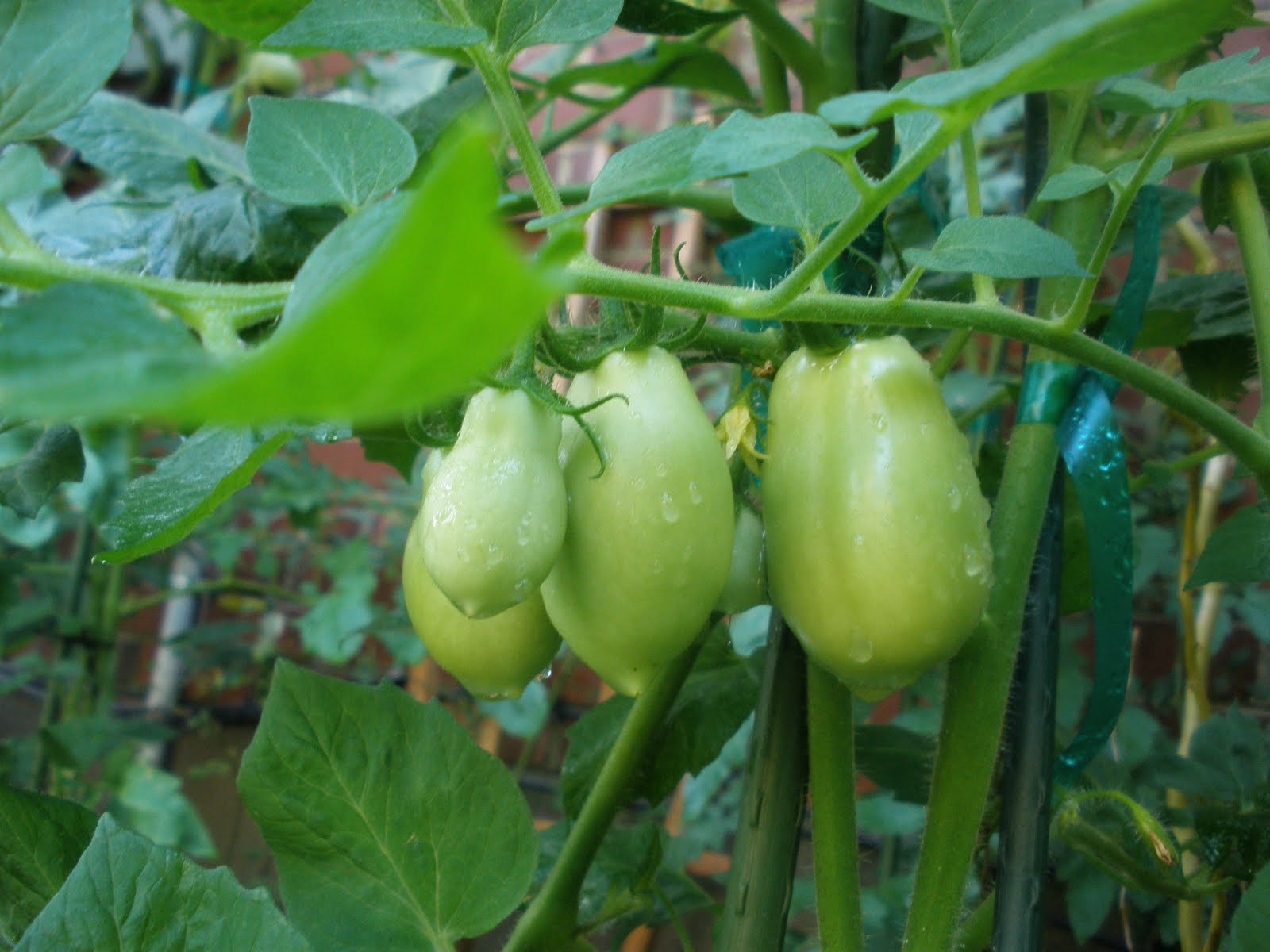
The ‘Black Cherry’ tomato is doing well and still producing lots of little tomatoes. The ‘Roma’, ‘Big Boy’, and ‘Mr. Stripey’ are still producing fruit, but it has been weeks since we were able to harvest a tomato (tomato thief). If they get close, I may just pull them off the vine early and let them ripen inside.

In the last big storm we had, the top of my large Butterfly Bush toppled over; so I had to cut it back and it looks a little unsightly. That hasn’t seemed to discourage any of the butterflies, luckily. I’ll have to do a better job of pruning this fall when I can really see its structure.

The Roses Of Sharon are completely hitting their stride now. At first I was disappointed in the lilac blooms; but now I’m overjoyed because I have three different colors at once. The white blooms which I love and remind me of my grandparents are now flowering alongside the lilac and pink blooming shrubs. It’s a beautiful palate of colors.

The Evening Primrose is STILL blooming, especially now that our evening temperatures are cooling off. That plant has got to be near the top of my “no maintenance required list.” Other no maintenance all-stars include the Oakleaf hydrangea and catmint that I have in the front beds and have basically neglected all season, but you’d never know!

Summer is definitely winding down. We’ve had a few evenings where temps dipped down into the low 60’s! I love the cooler weather, but I’m missing the long days of summer already. However, fall is one of my favorite times of the year; what with grilling out and college football, does sit get any better?

I’ve started reading ‘Omnivore’s Dilemma’, by Michael Pollan. This has been on my ‘plan to read’ list for sometime. I had read Pollan’s ‘Botany of Desire’ years ago and thoroughly enjoyed it. Despite the craze, I had put off reading ‘Omnivore’s Dilemma’, mainly because I thought it was an anti-meat eating campaign. So far though, the focus has been primarily on corn.

Turns out corn is in almost EVERYTHING: it feeds our livestock, fills our gas tanks, creates our processed foods, sweetens our sodas, and on and on and on. Corn and its cheap (government subsidized) products have a lot to do with our country's obesity and diabetes issues too. Not to mention our dependence on petroleum...

And while it’s not altogether new information, it has reminded me why it’s such a good idea to buy organic when possible. I prefer grass-fed beef (I felt like they were probably happier cows than feed-lot steer); but it wasn’t until reading this book that I was faced with the health and ecological consequences associated with the feed lots.

I’m finished with the first third of the book, having mostly to do with corn. The following are some of my notes from the book in the hopes that I may interest others in reading it. If you eat meat, shop in a grocery store, or have concerns about our reliance on fossil fuels, it’s a must read. Needless to say, I’ll be abstaining from chicken nuggets and reading more ingredient labels in the future!

 Government subsidies acct for nearly half of an Iowa corn farmer’s income.
 Without humans to plant corn every spring, modern corn would disappear from the earth in just a few years because it physically cannot reproduce on its own.
 Fritz Haber, the “father of chemical warfare” discovered how to synthesize ammonia while working on dirty bombs for WWI. His discovery, which won him a Nobel Prize, allowed us to fix nitrogen to the soil and completely revolutionized our industrial food chain.
 It takes more than a calorie of fossil fuels to produce a calorie of food in our industrialized agricultural food chain.
 Cargill is the largest privately held corporation in the world; Cargill and ADM combine to purchase 1/3 of all American corn.
 3/5 of our corn ends up on American factory farms, being eaten by primarily cows, who are not corn eaters by nature. Corn fed cows are problematic; this diet makes the cows sick, creates antibiotic and acid resistant bacteria, and creates a toxic waste dump of their feces.
 1/5 of America’s petroleum consumption goes to producing and transporting our food.
 From birth to slaughter (1200 pounds), a cow will consume the equivalent of 35 gallons of fuel, that’s a nearly a barrel.
 1/10 of our corn crop ends up in our gas tanks.
 The chicken nugget, invented in 1983 is the reason chicken has surpassed beef as America’s favorite meat.
 Of the 38 ingredients in a chicken nugget, 13 can be derived from corn.
 The most alarming chicken nugget ingredient: TBHQ; this toxic preservative is derived from petroleum and is a suspected carcinogen and known mutagen, tumorigen, and reproductive effector.


photo credit

Tuesday, August 17, 2010

guarding my garden!


Despite the 4’ tall mesh fencing, some critter/person is still nabbing all of my ripe Roma and Big Boy tomatoes, and stomping all over my Sedum in the process. For whatever reason, the Black Cherry’s have remained safe, and I’m hoping Mr. Stripey will look so strange to the tomato thief that those will be passed by as well.

I think I reached the peak of exasperation last week when once again we realized we had been had; without sign of a struggle with the fence or remnants of the ill-gotten treasure, it was gone without a trace. I became convinced that stealing someone’s vegetables was the lowest form of larceny, and began devising plans for video surveillance of the garden.

Maybe garden surveillance is a bit extreme, but short of that I'm running out of options. The 'Roma' and 'Big Boy' are still growing so much and I'm hopeful that I will be able to harvest just a few more this season. They are growing so much in fact that I had to use the nearby Butterfly Bush branches for support!

It is extremely frustrating to not be able to enjoy the proverbial ‘fruit’ of my labor, and equally frustrating that I’m not able to share with friends and neighbors. On a positive note, I have discovered that grilling cherry tomatoes is absolutely fabulous. We now put them on skewers with other chopped veggies and they have such a great flavor!

The basil is kicking it up a notch and the Rose of Sharon has really hit its stride too. My peppers have slowed down, and I finally cut back the Baptisia. Thankfully, I was able to collect some Hollyhock seeds before I cut them back to the ground; I’ll start those in the greenhouse this fall.

I have especially enjoyed watching the Monarch butterflies flutter around the Butterfly Bush lately. To watch them float around the lilac blooms is like witnessing an ethereal dance that defies gravity. Their elegant movements will mesmerize any visitor to the garden. These are truly amazing animals and I feel honored to host them on their migration.

Wednesday, July 28, 2010

reap what you sow


This image is the bloom from a Rose of Sharon that seeded itself next to my deck in the back of my house. It was a pleasant surprise and a welcome ‘Good Morning’ from the garden when I let the dog out this morning.

Recently, I have been reading the book ‘grace from the garden: changing the world one garden at a time’, written by Debra Landwehr Engle. It’s full of inspirational gardening stories and I highly recommend it. In one of the last chapters of the book, I read the following garden poem:

for the garden of your daily living:
plant three rows of peas,
1. peas of mind
2. peas of heart
3. peas of soul

plant four rows of squash,
1. squash gossip
2. squash indifference
3. squash grumbling
4. squash selfishness

plant four rows of lettuce:
1. lettuce be faithful
2. lettuce be kind
3. lettuce be patient
4. lettuce really love one another

no garden is without turnips,
1. turnip for meetings
2. turnip for service
3. turnip to help one another

to conclude our garden, we must have thyme.
1. thyme for each other
2. thyme for family
3. thyme for friends

water freely with patience and cultivate with love. there is much fruit in your garden because you reap what you sow.

Tuesday, July 13, 2010

le jardin de pizza


It has been 3 weeks since my last blog post and all I can say is I’ve been busy; and so has my garden. Last night we made a pizza using homegrown Roma tomatoes, basil, and bell peppers. It was so delicious, it has inspired this ‘pizza garden’ blog!

Part of the reason I have been too busy to blog was that I read 'My Life in France' in record time for my first book club meeting. Julia Child's book was absolutely delightful in every way; I felt as though I was travelling and eating all over France with her, ergo the blog's title. [Pizza, however, was not a part of her French culinary escapades.]

Pizza gardens are gardens that simply contain the ingredients one may want to put on a pizza. Looking into it, I found that ‘pizza gardens’ all usually contain at least tomatoes and basil. The rest of the ingredients/plants could include sweet peppers, hot peppers, oregano, onions, parsley, eggplant, scallions, rosemary, jalapeños, cilantro, spinach, etc.

This theme could be wildly popular with kids too; picture a raised vegetable/herb garden actually in the shape of a pizza pie, with dividers made to look like ‘slices’ of pizza! It was a lot of fun enjoying the ‘fruits’ of my vegetable garden labor. And as the Roma’s continue to ripen and the garden yields more peppers, I hope to try another pizza soon!

There are ‘Black Cherry’ tomatoes ripening everyday, from the bottom of the plant upward. That tomato plant is now almost 7’ tall. I also harvested my first ‘Big Boy’ tomato over the weekend and will be trying that soon. ‘Big Boy’ only has a few more tomatoes ripening so I’m a little disappointed in its yield.

‘Mr. Stripey’ has yet to produce any fruit, but I am hopeful as it continues to grow and flower. The other no-name tomatoes are still growing, but remain fruitless as well. The jalapeño plant is producing lots, though I have yet to actually try one. And the red bell pepper is growing like a weed, but hasn’t set fruit yet.

The Black-eyed Susan’s are blooming profusely, and look great next to the sedums which are finally flowering. The butterfly bush and Verbena are flowering nicely as well. Although I was surprised that the butterfly bush I relocated across the drive has a lighter bloom color, almost a soft pink/purple as opposed to the lilac of the parent plant.

The Rose of Sharon are starting to bloom more, but are darker in color than I was expecting. Now, the blooms are lilac with a darker, magenta eye. The hollyhocks have completely petered out and I see no signs of seed pods so I’ll be cutting them all back soon.

The mint is almost taking over that planting bed, but it is nice to smell. The evening primrose is still blooming, and its fragrance is light and lovely in the evenings. We’ve received plenty of rain lately, so I’ve been able to cut back on watering. Also, our mid-to-upper 90 degree days have cooled slightly. Until next time, happy gardening!

the image used above is not my creation, instead i found it here.

Tuesday, June 22, 2010

Cooper, my garden companion


Whenever I garden, my trusty watch dog is looking out for me. At the top of our hill, Cooper sits and keeps watch over the goings on of the street below. Now he may be simply looking for squirrels to chase, but I think he is genuinely looking out for me and our homestead while I am busy gardening away.

He sits there, at attention, sometimes for hours. And he always resumes his post in the exact same spot. Occasionally, he will take advantage of my inattentiveness to slip off and play with the neighborhood dogs or chase squirrels. For the most part though, he is my constant garden companion and watch dog.

I was pleased to discover a plant that I thought might be a ‘weed’, turned out to be garden phlox (Phlox paniculata). I had kept several of this tall plant with strap-like leaves in the hope it was something worth keeping and I’m really glad I did. They bloomed bright fuchsia this week, and after passing the ‘phlox test,’ I knew I had something special.

What is the ‘phlox test?’ I believe Dr. Alan Armitage taught me this, but I’m not totally sure. Basically, if you pull the flower petals out of the stem and they remain as one flower unit instead of separate petals, than you have a phlox. Seems elementary (and it is) but I have found this technique very useful in plant identification. After all, there are hundreds of phlox species ranging from groundcovers to 4’ tall perennials, and a wide variety of flower color.

Bright fuchsia is not a color I would have ever picked for my garden, but I love it. It’s so vivid and eye-catching. This phlox is supposed to bloom throughout the summer and into the fall. We’ll see how it looks with the other summer blooming flowers…

The tomatoes and herbs are doing well. The Black Cherry’s are the first tomatoes to start turning a reddish color. My singular jalapeño fell off the plant, so picked it up and may try it out soon in some cooking, despite it’s small size (about 1 ½” long). I need to fertilize the veggies again, maybe today. I try and fertilize a few times a week with a liquid fertilizer.

I’m still a little befuddled by the Hollyhocks and Rose of Sharon. The Hollyhocks bloomed well, but only bloomed white. And the Rose of Sharon (there are five plants in total) have had less than three blooms combined. I have neighbors with Rose of Sharon’s that are covered in blooms.

I have found many tips for improving my Hollyhocks next year, like pinching off new growth a few times before flower buds appear. And I can also conceive that since this is the first growing season the Rose of Sharon have been in the ground, maybe they are focusing more on foliage than flowers. Bottom line, these plants may just need more sunlight.

This is an unfortunate conclusion, because I have only one ‘full sun’ planting bed. And it’s getting very crowded as is. But alas, since these Hollyhocks and Rose of Sharon are so important to me, I’m sure I’ll be relocating some to the west side planting bed this fall.

Another Hollyhock issue that has developed is Hollyhock Rust (Puccinia malvacearum). This fungus is characterized by yellow-orange bumps throughout the leaves and stalks of the plant. At this point, there’s not much I can do except remove unsightly foliage.

In the fall I will be sure to cut back the Hollyhocks hard and destroy all foliage instead of composting. I may consider an early spring fungicide application as well as spread the plants out more to improve circulation.

My garden is on the cusp of having lots of blooms and veggies by the end of the month. I hope I can keep up with all of the watering until then. It’s been topping out in the mid-nineties here lately with rain showers few and far between.

Wednesday, June 16, 2010

tall tomatoes and such


Now my tomatoes are taller than me, 5'-5". Well Big Boy and Black Cherry are at least, with Roma (pictured) right behind. Mr. Stripey had a later start and I’ve even relocated him once so I’m not surprised his growth is dwarfed by the others. I may have to buy several more, larger stakes to secure the three larger tomatoes, which continue to reach for the heavens.

The three large tomato plants all have multiple baby tomatoes that grow larger and more numerous everyday. I need to prune out some of the excessive foliage and suckers ASAP. And, I have a baby jalapeño! So far, however, that’s my only pepper.

I won’t be posting photos of my herb pot anytime soon, it has seen better days. The thyme is doing great and the parsley is fine, the variegated basil even looks to be making a comeback. But the cilantro has ‘gone to seed’ and looking worse each day. I’m hoping I’ll be able to harvest some coriander, but I’m not holding my breath.

I have planted a new basil plant and hope to add others as I count more tomatoes everyday! The Rosemary is doing great and has probably doubled in size since I planted it earlier this year. And the mint is going gangbusters, taking over the driveway planting bed.

Also in the driveway planting bed, the last remaining Hollyhock flower buds are blooming. Still all white! And the Rose of Sharon (pictured) has begun to bloom! I have counted only two blooms so I’m hoping for more. It is one of my all-time favorite flowers; admittedly this may be because they remind me of my grandparents, but nonetheless, gorgeous.

Back across the drive, in the west side planting bed, the Black-eyed Susans have begun to bloom. They will look great alongside the pinkish reds of the sedums and daylilies close by. Along with the tiger lilies, the pink/red, orange, yellow combination is actually quite lovely.

Also, I have discovered that a beloved annual, Verbena bonariensis, has reseeded itself. While not the most ideal location (in the front of the flower border), it’s a welcome surprise! This annual has rose purple flower clusters at the end of slender square stems growing 4’ or more in height.

I prefer this plant in the back of the flower border, and often pinch it back a few times to induce a more compact habit. Once it starts blooming, you will have color on into the fall. Another benefit is this plant attracts butterflies and gold finches. The only downside is an occasional powdery mildew episode; if this occurs, I just cut back all affected foliage.

And finally, a favorite perennial planted on the bank at the rear property line, the evening primrose (Oenothera), has begun to bloom! I don’t know much about this plant, but I’m delighted that it seems to have spread and I now have at least twice as many plants as last year. [I believe it spreads by seed, because one popped up in a nearby pot.]

I’m amazed that this inconspicuous plant has thrived where it has, competing with the likes of ivy and euonymus. As the name suggests, swirls of buttery yellow blooms open up after the sun goes down. It’s great in combination with the tiger lily; especially since they both bloom at a height of 3-4’. The flowers are truly beautiful, and the perfect crescendo to a summer day.

Thursday, May 27, 2010

bugs are gone!


The ant/aphid infestation on my Rose of Sharon is completely gone. And since spraying my hollyhocks with Sevin I haven’t seen any more hollyhock sawfly larvae chomping away. They still haven’t bloomed, but I’m hopefully every day when I come home from work to catch a glimpse of color.

Last weekend I removed a portion of my Black-eyed Susan’s in the west side planting bed to make room for two more pepper plants and give my rosemary some more space. In addition to the new red and green bell peppers, I also planted an heirloom tomato in the driveway planting bed. I’m hoping it will get enough sun there, because I’m running out of space elsewhere.

Mr. Stripey, as he’s called, is an old-fashioned beefsteak that will have yellow and red stripes outside and mostly yellow coloring inside the fruit. It has tiny leaves and the flavor is supposed to be sweet and mild. We’ll see in approximately 56 days!

I think I initially underestimated the support my tomatoes would require. But now I regret skimping on the stake size, because my ‘big boy’ and ‘black cherry’ tomatoes have already grown almost to the top of their stakes. So, I will have to purchase taller/stronger stakes to support these veggies and re-tie all of the tomatoes. Bummer.

I also (finally) replaced the pansies in my pots by the front steps with a ‘lemon chiffon’ million bells (Calibrachoa) in each pot. I’m not usually one for monochromatic pot plantings, but my front door is hardly used and there’s enough going on in the nearby planting beds to warrant simple pots.

My oakleaf hydrangea (Hydrangea quercifolia) have started blooming on both sides of the front door and look really great behind my patch of catmint (Nepeta) to the right of the front door. To balance that, the Nepalese columbines I planted on the left side of the front door bloomed well and are slowly taking over one side of that planting bed.

The Hellebores are still blooming and look great next to the sensitive ferns (Onoclea sensiblis) out front. My Iris have finished blooming and I need to weed the bed by the mailbox to get it ready for the daylilies which will start to bloom soon.

The only other annual I have added this season is a ‘Mini Blue-Veined’ Supertunia. I added this to my blue pot with the Salvia and Spirea. The salvia has already started blooming and the Spirea will soon follow.

My herb pot is not looking so good. The cilantro started to bolt last week, so I cut off some of the flower buds. The basil, which has been looking ill ever since the floods, now looks awful. My parsley and thyme are the only things doing well. They seem to have had good drainage and decent sun where they are. I may have to start over with new cilantro and basil, maybe even from seed.

Tuesday, April 27, 2010

veggies and such


The tomatoes I have included in my garden thus far include Roma, ‘Black Cherry’, and ‘Big Boy’. Roma is a smaller tomato that should have a plentiful harvest starting in 70-80 days from transplanting. ‘Black Cherry’ is a sweet-flavored, round dark cherry tomato that should ripen within 60 days of transplanting. ‘Big Boy’ is a meaty, large hybrid introduced by Burpee in 1949. ‘Big Boy’ will ripen within 80-90 days from transplanting.

So, by the end of June, I should be harvesting the first tomatoes. I would still like to add an heirloom variety tomato and some more varieties of peppers. I have already planted one Jalapeno pepper which will ripen in 78 days.

Everything else in the garden is doing great. My Iris is now blooming very well by the mailbox, white and yellow blooms. The Baptisia and Peonies are about to bloom. My Azalea in the secret garden is blooming wonderfully.

The only pest problems I’ve had continue to be the aphids and ants on my Rose of Sharon. I used soap spray on them last week, but it has rained off and on since then so I don’t think it’s had a chance to work yet. I’ll keep trying the soap spray.

The photo is of my ‘herb garden’ container and some other perennial plant containers that I keep directly off my back deck. I'll probably add a petunia or million bells to the blue pot soon. But, I love all the different colors foliage and the pots themselves provide right now, without a single flower!

Wednesday, April 21, 2010

taking up space, in a good way!


I finally planted my herb garden (in a pot), Roma tomato (with stake), and all of my hollyhocks. In order to plant the tomato, I had to relocate some Black-eyed Susans and realized I just have too many. So, in addition to the previously offered sedum, mint, and creeping jenny, I would also like to offer some Black-eyed Susans.

When planting the tomato, I was reminded that all tomatoes are virtually vines. Because tomatoes try to root wherever the stem touches soil, planting lower will create more roots and better support. I removed the lowest pairs of leaves and then literally back filled the hole just under the first leaves. I put a 4’ green stake next to it and will use flexible cloth ties to secure it as it grows.

I also finally got to plant my new blue pot! I relocated an existing Salvia and ‘neon flash’ Spirea to the blue pot and will add some sort of flowering, trailing annual as well. The pot itself was already quite heavy and the thought of filling it with soil was less than attractive. For this reason, I put two empty plastic bottles in the bottom to take up some space (pictures). This is a great way to save soil and reuse some of those plastic bottles too!

The aphids (and ants) are still coming back on my Rose of Sharons, so my next step is to spray them with a soap solution. There are a variety of homemade soap spray recipes on-line. I think I’ll just mix some dish soap and water in a small hand-sprayer and see how that works.

Wednesday, April 14, 2010

Ants and things


Things are growing great in the garden. I spent some time last weekend weeding several beds and trying to ‘thin the heard’ of mint, creeping jenny, and sedum. Would anyone like to come over and take home a sampling of these voracious ground covers?! I also mulched a little and amended the soil for the Hollyhocks which I will be planting this week!

The Hellebores are still blooming. The Rosemary is blooming now, pretty little blue flowers. The Peonies, Baptisia, and Iris will all be blooming soon. My Epimediums are now blooming in my side shade garden (picture). That’s a really neat perennial for the shade garden. They are also commonly referred to as Barrenwort and Bishop’s hat.

Epimediums are grown as much for their flowers as they are for their heart-shaped foliage which can take on beautiful fall coloring. Their tiny flowers are suspended ever so gracefully on their arching flower stalks. Epimediums make great accent plants and groundcovers, although they die back almost completely in our zone. I like to pair my yellow blooming Epimediums with purple-leaved plants like Ajuga and Heuchera.

I recently discovered ants on some of my Rose of Sharon. I fear the ants are ‘milking’ aphids which in turn are feasting on the new foliage. This morning I sprayed the bugs off with water, let’s hope that keeps them away. My next approach may be to use a soap spray. I generally try to avoid using any chemicals in the garden, but especially now that I’m growing edible plants, that would be my last resort.

There are ants on my Peonies as well, which are across the driveway. I have come to expect this every year on the Peonies. [Although at first it was alarming and I admit I sprayed my Peonies with ant killer chemicals that first year] A very knowledgeable gardener explained to me that ants help the Peony buds ‘open up’. So now I ignore the ants, and my peonies have never suffered because of them.

Tuesday, April 6, 2010

Spring Update


The garden is growing everyday and this has been a really pretty spring in Nashville. I haven't worked in the garden too much lately as I've been out of town and working on other projects around the house, e.g., cleaning my wood deck and outdoor furniture. It's still technically too early to plant anything tender, though I doubt we’ll get another frost.

I can’t wait to get my Hollyhock seedlings into the ground; there are now only five left, but they are thriving! Also, I’ve started looking around for veggie starters and haven’t seen any yet. But I’m sure in a few weeks I’ll have my pick of tomato and pepper varieties.

Right now, I’m just enjoying watching everything leaf out and come out of the ground. My peonies are now over a foot tall. I completely forgot about my Baptisia, until they poked through the soil (I think they bloom yellow). My Dogwood tree in the front yard is starting to bloom (white) and the Hellebores are still going strong!

My Rose of Sharon (Hibiscus) are now leafing out too. This always surprises me because they are one of the last woody plants to leaf out every year and it always makes me nervous that they may be dead. Throughout the early spring I do a scratch test on the bark to make sure it’s still green and confirm that they are still alive.

All of my Rose of Sharon are progeny of my grandparent’s Rose of Sharon. While this plant comes in a variety of bloom colors, mine bloom white to pale pink with a much darker center (see picture). This is literally one of my favorite flowers, and quite a low-maintenance plant to boot.

Ultimately, Rose of Sharon’s may reach 10-15’ in height and half that in spread. But it’s very easy to prune them into whatever shape you like. Also, their environment will play a role as they tend to be much denser in form and better blooming in full sun. I have seem them do well in partial shade too, though their appearance in more spindly. They work well as a single specimen or in a grouping.

This is a great old-fashioned shrub that I think is becoming more popular as people discover all of its assets. There are two main types of Hibiscus; one is a hardy woody shrub, the other more tropical type usually has larger blooms but needs to be cut back to the ground every year. I would recommend researching the colors/varieties and even seeing them in bloom before purchase. Or you can take your chance on seeds, which are usually plentiful in the late summer.

Friday, March 26, 2010

longer days, more gardening adventures part 2


With eastern exposure, the planting bed across the driveway gets almost as much sun as the bed on the west side of the house. This planting bed sits between my neighbor’s fence and my asphalt drive and is only about 2’ wide. When I first moved in, it was nothing but Bermuda grass and I soon found out why. The soil is full of rocks. Every time I plant something new, I feel like I’m gardening in a rock quarry. On the bright side, the soil drains very easily.

Nevertheless I’ve removed most of the Bermuda (worst gardening chore ever) and amended the soil with soil conditioner. On the left is my recently transplanted butterfly bush, which I cut back to about 18” in height. The other 5 shrubs you see are Rose of Sharon (Hibiscus), a plant very near to my heart, which hasn’t quite leafed out yet. Between the Rose of Sharon groupings are several Hollyhocks (from the Hollyhock House!) that have over-wintered.

Beneath the shrubs are several sedum varieties as well as mint (Mentha). This aromatic herb (non-native) spreads quickly by way of underground rhizomes and I like to caution people that it should be planted in a contained/ well-maintained area. In the right corner of the bed are coral-blooming Canna Lilies. But after this past winter, I’m not holding my breath to see if the Cannas will make an appearance this summer (they can be borderline in zone 6b).

On the right edge of the photo, you can see the outstretched branches of a Mulberry tree (Morus), which has little to no landscape value. However, because this volunteer (which is actually rooted on my neighbor’s property) started growing in a fan-shape on my side of the fence, I’ve elected to train it as a ‘living fence’; to create a vertical screen between the two properties. Nothing against my neighbor, but I don’t prefer to see into her living room from mine.

The main goal of this bed is to increase my gardening space as well as improve the aesthetics of the space. Also, I’m not sure how much longer my neighbor’s fence will hold up, so I wanted to get some plants going ASAP. On one hand, it may have been more prudent to plant a row of Arborvitae or another evergreen, vertical screen. However, all of these plants were free to me, and will provide much more seasonal interest than a green wall.

And like the last blog post, this photo is not much to look at right now; but hopefully by this summer, there will be tons of beautiful blooms!