Showing posts with label daffodil. Show all posts

Wednesday, February 15, 2012

february blooms


Looking back at my garden notes from Februaries past, one thing’s for sure, plants are blooming earlier. This has been a whacky winter; and by whacky I mean mild and wonderful. I’ve actually enjoyed spending time outdoors throughout most of this winter, which is in stark contrast to the incredibly snowy winter Nashville saw last year.

Flowering Quince (Chaenomeles), Daffodils (Narcissus), Lenten Rose (Helleborus), and Witchhazel (Hamamelis) lead the charge (and the Camellias are still blooming!). The thought of grouping all late-winter blooming plants together in one composition seems a perfect way to combat winter blues. And while ordinarily opposed to such theme gardens, this is one I’d like to try.


Friday, March 18, 2011

fall planted bulbs are abloom!


I don’t need a calendar to tell me it is spring. With temperatures in the 70's, there are new blooms to enjoy every day. Among my favorite flowers right now are crocus, grape hyacinths, daffodils, and my favorite deciduous magnolia, the Saucer Magnolia (Magnolia x soulangiana).

Perennial Crocus grow from corms (like a small bulb) planted in the fall. Their grass-like foliage and petite flowers won’t grow taller than 5”, so use them in the front of a planting bed. The white and purple varieties nicely offset the electric orange central stigmas. The spice saffron is obtained from the fall-blooming cousin of this plant (Crocus sativa).

Grape Hyacinths (Muscari) received their name from the spikes of blue flowers that resemble a bunch of grapes. This perennial, grown from a bulb planted in the fall, is even more petite than the Crocus. It’s perfect companion is a yellow daffodil, King Alfred for example, planted in alternating clumps/drifts.

Despite it’s observed commonness, the Saucer Magnolia is truly a thing to marvel. I first noticed this tree while going to school in Athens, Georgia. One specimen in particular (pictured in Dirr’s Hardy Trees and Shrubs) located out front of the AGD house on fraternity/sorority row is particularly memorable.

Its canopy of tulip-like pinkish-purple flowers is “one of spring’s greatest spectacles” according to Dr. Dirr, and I’m inclined to agree. This deciduous magnolia is a real show-stopper, with an attractive multi-trunked habit. But, since it’s just a one season wonder, I would plant this only as a specimen or focal point of a spring garden and not in a group.

This weekend marks seed planting time for my lettuce, carrots, and Swiss Chard! Another landscape project I hope to start is installing a stone border that wraps around all the planting beds against the house. Aside from aesthetic benefits, the border should also help slow the spread of Bermuda grass into the planting beds.

And speaking of grasses, if you haven't already cut back landscape grasses such as River Oats (Chasmanthium), Sioux Blue Indian Grass (Sorghastrum), Sweet Flag (Acorus) et cetera, do it now, before the new shoots emerge!

Tuesday, March 8, 2011

11 days til spring!


The Hellebores (pictured) are looking better everyday. Peonies are starting to come up out of the ground; their little red spikes look other-worldly. I’ve also noticed the Star Magnolias (Magnolia stellata, pictured) blooming around town. There is nothing quite like a deciduous magnolia’s bloom, and if I had room in my garden, I’d plant one!

Last weekend I cut back all of my Catmint (Nepeta) to reveal new leaves at the base of the plants. It has rained a lot here lately and the damp ground made weeding out maple seedlings that were overwintering in my planting beds much easier.

More daffodils (Narcissus) are popping up, including King Alfred, which is another good trumpet variety. Daffodils make fantastic cut flowers; cut three stems for a simple (and fragrant!) arrangement.

Another garden task to be done this time of year: soil testing. Soil tests are fairly cheap (about $7 in Davidson County), can be performed at your local county extension office. I recommend testing every two years, or every year if you’re trying to correct a serious problem like pH.

Also, I planted an onion that had sprouted in my kitchen; not sure how that will fare outdoors, but I plan on eating the sprouts in a future salad. Now is a good time to plan the veggie garden and purchase seeds.

I bought lettuce, Swiss chard, and carrots to try from seed this year. All of these should be planted 3-4 weeks before the last average frost date. So I’ve marked March 20th (first day of spring!) on my calendar to kick off my vegetable garden. To find your last frost date, check here.

According to the Environmental Working Group, carrots and lettuce are a few veggies that contain high concentrations of pesticides. This isn’t surprising since these plants all have ‘thin skins.’ Because of this (and so many other reasons), I’ll be eating as much as I can from my own garden, and relying more on my CSA this year.

To find a participating farm near you, visit localharvest.org. In Nashville, I recommend Fresh Harvest.

Friday, February 25, 2011

Only 23 Days 'til Spring!


Currently, there are several blooming plants in the garden: Witchhazel, Hellebore, Forsythia, and Daffodil! What’s interesting is that three of these four bloomers are yellow. I happen to like yellow, think it’s a fresh and exciting color. But you may be surprised that in talking to clients, it’s one of the least favored flower colors.

Some of the Witchhazel (Hamamelis) varieties are still blooming and the fragrance is quickly becoming one of my favorite. It’s a sweetness tinged with citrus that makes you literally stop in your tracks to take in the aroma, delightful!

The Hellebores started blooming this week, and that show will go on for months. One of my favorite perennials, this plant is a real trooper. I went through and clipped out any tired-looking foliage, which made the flowers stand out even more. My hellebores are lavender blooming, but I love the white and speckled varieties just as much.

Forsythia is a great shrub to use en masse, if you have a large area to devote to them. But more often then not, they are (over) planted in small areas and pruned incorrectly. What results is a boxy-looking shrub with sparse flowers. This plant will grow 10’ tall and needs delicate pruning immediately after flowering to ensure a good show next year.

Rijnveld’s Early Sensation Daffodil (Narcissus) is the earliest hardy daffodil to bloom. It is classified as a trumpet daffodil, which means it has one of the larger blooms of the species. The two-toned yellow blooms stand about 12” tall, and will keep blooming despite any future blankets of snow.

There’s only 23 more days until spring, let the count down begin!

Monday, January 31, 2011

first blooms of 2011!


As big snowflakes flurried around Nashville this morning, I saw the first signs that spring is in fact right around the corner…daffodils peeking through the soil! It will still be several weeks before they bloom, but it is exciting nonetheless. Today I was also greeted by the first bloom of 2011, Witchhazel (Hamamelis vernalis).

Witchhazel is a beautiful large shrub of which there are several native varieties. Landscape features include gorgeous yellow fall color and pungently fragrant yellow/orange flowers in late winter. This is a great shrub for massing in the back of a naturalized border planting. “A tough plant with an alley-cat tenacity” says woody plant expert, Dr. Dirr.

Another plant on my bloom watch list is the Lenten Rose (Helleborus). Speaking of Lenten Rose, the person who introduced me to that amazing perennial, Dr. Allan Armitage has revised Armitage’s Garden Perennials. The new version will be out this summer and is a must-have book for any perennial gardener.

Last weekend I took advantage of extraordinarily mild temperatures to finish cutting back all remaining perennials and mulching a few of the planting beds. Working in the garden, I noticed how graceless my large butterfly bush has become. I’m going to have to cut it back and remove a lot of water sprouts before it leafs out.

[Water sprouts are vigorous growths along a branch that grow almost vertically and are aesthetically displeasing.]

This time of year can be down-right depressing with grey days and freezing temperatures. Knowing that spring will soon be here provides some relief from winter doldrums. Until then, I will keep thumbing through garden catalogues and dreaming of warmer days and the beautiful blooms to come!

Tuesday, January 4, 2011

winter gardening


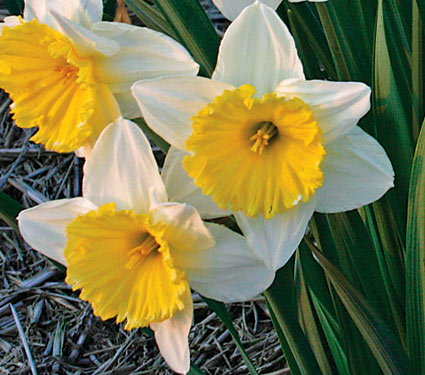
I planted a handful of daffodils last weekend. The image to the left is 'Ice Follies'; can't wait to see them come up this spring! I was pleased to find that it was relatively easy to dig the 6" daffodil holes in most areas of the garden. I sprinkled a few by the back door, some on either side of the front steps, and a few on the other side of the driveway.

While I was digging, I noticed that the pachysandra has spread even more, with little shoots coming up about 12-18" from the large clump near the back door. This time of year, garden troopers like Pachysandra and Lenten Rose (Helleborus) really shine while everything else is dormant.

Tuesday, December 28, 2010

Garden Year In Review


It has been months since I blogged about my garden so there’s lots to catch up on; and I thought I would review this year’s garden successes and failures. By all accounts, I was far more productive in 2010 than I had been in previous years. I may not have weeded as much as I could/should have, but I had a modicum of success with the hollyhocks, veggies, and herbs. Also, I hope to have some quality compost to add to the garden at the start of the next growing season.

Into the fall we enjoyed tomatoes, peppers, and fresh herbs. I definitely plan on growing Romas and Cherry tomatoes again, but I may look into other beefsteak and heirloom varieties since Big Boy and Mr. Stripey didn’t perform as well. Although by all accounts, this was a difficult year for growing tomatoes in my area. The unseasonably hot nights prevented the tomato flowers from pollinating and ergo many folks had smaller yields this year.

My tomato staking system worked well; at one point all of the tomatoes were taller than me and I had to attach them to nearby shrubs and walls for support. Just before the first hard frost, I harvested all of the remaining (green) tomatoes and brought them inside to ripen. We had home grown tomatoes ripening for almost two months after that!

I plan on growing more peppers, especially more hot peppers next season. The jalapenos were very successful. I may try my hand at a few other varieties including Serrano, Poblano, and Banana peppers too. The red peppers fruited so late that I wasn't able to harvest a red pepper, instead I plucked the ripening (green)peppers off the plants and made stuffed peppers with them. All of the homegrown peppers proved far superior to their store-bought counterparts.

The last of the parsley was harvested two weeks ago, as it was snowing; and I'm frequently cutting sprigs of fresh rosemary for various recipes. Next year I will keep cilantro seeds around to plant every few weeks as they will inevitably bolt before I’m able to make my homemade guacamole. Thanks little sis for my new mortar and pestle!

This fall’s garden maintenance mainly consisted of cutting back all perennials, veggies and taking out the tomato and pepper supports. This was made slightly more cumbersome by the mesh fencing I installed mid-growing season. Using two of my favorite garden accessories, West County waterproof gloves and Felco pruners, this task took about fifteen minutes.

[It’s important to note that like rose clippings, tomato plant refuse shouldn’t be composted because there is a high likelihood of diseases outliving the composting process. I have decided to burn such debris in our fire pit.]

The reason the West County gloves are worth mentioning is that not only are they waterproof and washable, they’re warm. It is still easy to grasp things and do slightly detailed garden work year round. Also, the insulating material makes pruning tasks blister free!

The Felco’s are garden essentials and with proper cleaning and sharpening should last a lifetime; all parts are replaceable. The ergonomic Felco 6’s fit my petite hand very well and are the best pruners I have ever used. This size easily cuts through branches 3/4" thick. But one should be careful, they are very sharp and powerful; I have inadvertently cut through a small rock with these pruners before.

I have daffodil bulbs to plant if I could find the time when the ground wasn’t frozen. October through December is the best time to plant spring-blooming bulbs. The two varieties I have to plant are ‘Ice Follies’ and ‘Mount Hood’. 'Ice Follies' is a large white daffodil with a bright yellow center. 'Mount Hood' opens up a pale yellow, and then quickly becomes an all white giant trumpet. Both of these naturalize readily and perform well in the south.

Typically, I like to see daffodils planted in large swaths (anywhere from 500-1500) to create a bold statement in the spring. Since my gardening area is so small, I will be planting mere handfuls of them here and there. Van Engelen is an economical source for large quantity orders; another daffodil source I use is Brent and Becky's Bulbs.

Thursday, February 18, 2010

to everything, there is a season


At work yesterday, I was elated when I caught a glimpse of the first signs of spring…daffodils coming up! It’s easy to think after 3 weeks of snow on the ground that we will forever be stuck in winter. But with those spikes of perennial daffodil foliage, we are reminded once again that even winter comes to an end. And with that end comes the promise of spring blooms!

This particular outcropping of white and pale yellow daffodils lies under a small grouping of reddish-pink blooming redbud trees, with the mulch path to the greenhouse running right through them. It’s an incredible combination of spring blooms.