Showing posts with label spring blooming. Show all posts

Wednesday, February 27, 2013

2013: Damp & Cold


To paraphrase Steinbeck's East of Eden, February of 2013 was a year heavy with water. And it has been; at 10”, Nashville is 30% above average precipitation for the year. We have also had several wind storms which caused downed trees and power lines. My neighbors had two cars totaled after a recent wind storm; the ground was just too saturated to hold a large precarious tree, which luckily missed their house when it fell.

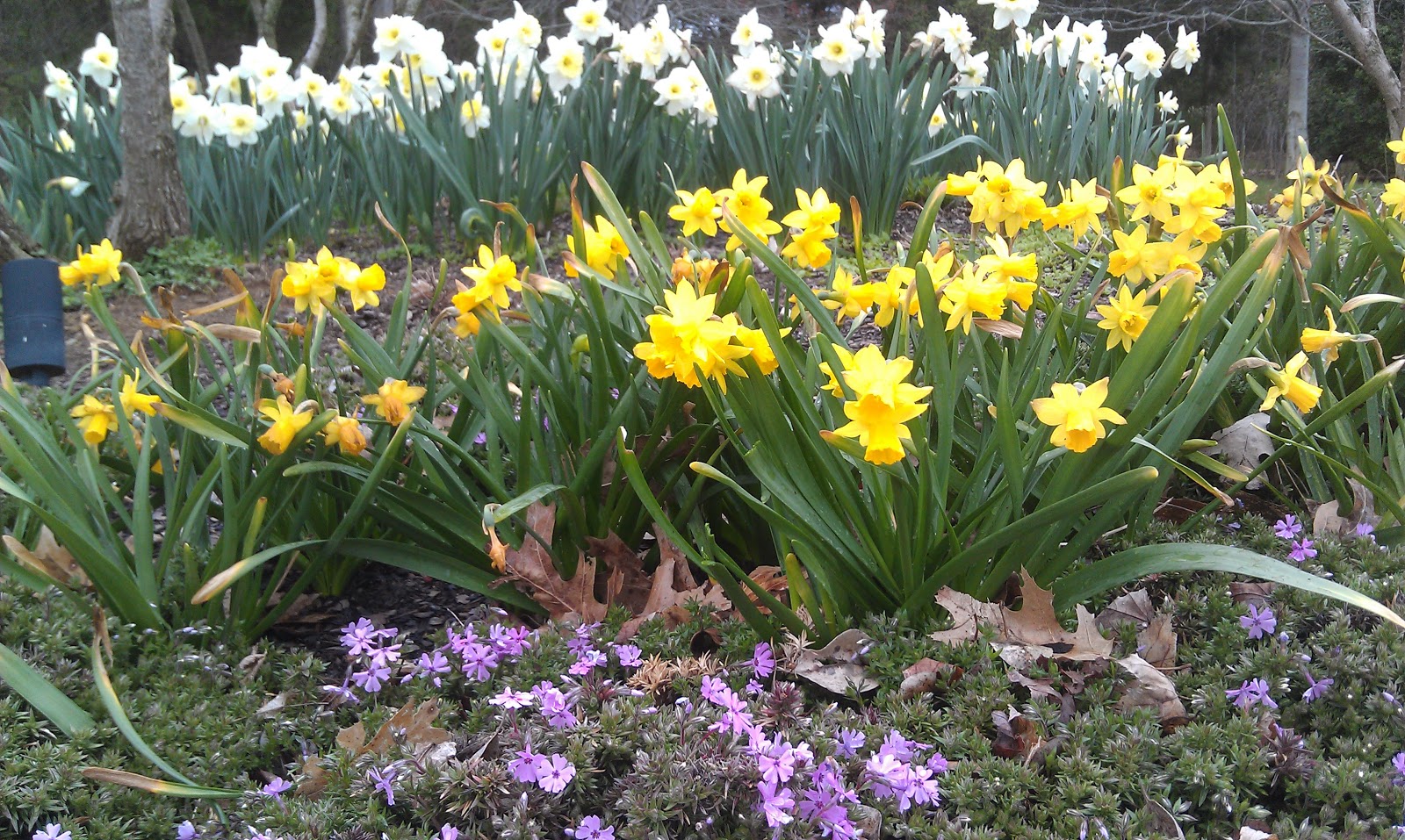
The wet weather has been great for any new trees planted this winter, and for all early blooming trees, shrubs, and flowers. It’s a relief to see Flowering Quinces, Daffodils, Hellebores, and Cherry trees blooming, only 21 days till spring! This year’s Vernal Equinox is on March 20th. And just one day after is a lecture on native plants and rain gardens at the Shelby Bottoms Nature Center by Mike Berkley of GroWild, more info here.

In my own garden I am cutting back anything yet to be cut back, mulching, and planting. I still need to severely prune my butterfly bushes and camellias, as well as plant a new Rhododendron. There are still several weeks left in the ideal planting window to get any last minute trees or shrubs in the ground before bud break. I am so looking forward to longer days and weather better suited to spending time outside!

Monday, April 9, 2012

Easter Blooms


Mom's blooming azaleas, with viburnum in the background

Spring is in full swing as evidenced by a profusion of blooms, buds, and pollen. But we’re not quite done with cold weather; the forecast for this week shows two nights with lows in the mid-thirties. So I’ve set my sights on this weekend for planting veggie starts.

Among the available pink blueberries, purple potatoes, and apple mint, I have whittled my wish list down to a few veggies and herbs including some varieties new to my garden such as ‘Salad Bush’ cucumber, ‘Golden midget’ corn, ‘Sweet Banana’ peppers, and ‘Taxi’ tomatoes.

Over Easter weekend I had the delight of taking in all of the striking azaleas that flourish throughout my mom’s established neighborhood. Also flowering now are Spirea, Iris, Peonies, and Ajuga. The strawberries have tiny green fruit now and I can’t wait till they ripen; which is usually in May, but this year will probably be sometime in April. 

ajuga lawn
strawberries
If I had unlimited space at the perfect exposure, I’d like to plant all of these:
Cucumbers:
§      Salad Bush
§      Sweet Success
§      Green fingers
§      Bush pickle
Green Onions:
§      Evergreen hardy white
§      Parade
Sweet peppers:
§      ‘California Wonder’ (for stuffing)
§      ‘Sweet Banana’
Hot peppers:
§      ‘Pretty in Purple’
§      ‘Tabasco’
§      ‘Jalapeno’
Corn:
§      ‘Golden Midget’
Red Heirloom Tomatoes:
§      Brandywine
§      Soldacki
§      Italian Heirloom
§      Juane Flammee
Purple HeirloomTomatoes:
§      Cherokee Purple
§      Nyagous
Green Heirloom Tomatoes:
§      Aunt Ruby’s German Green
§      Green Zebra
Yellow Heirloom Tomatoes:
§      Dr. Wyche’s Yellow
§      Beam’s Yellow Pear
§      Taxi (early)
§      Sungold (cherry)
Cherry Tomatoes:
§      Mexico midget
§      Black Cherry (early)
§      Sweet 100
§      Red currant
Other Tomatoes:
§      Carmello
§      Roma
Herbs:
§      Basil
§      Chives
§      Cilantro
§      Parsley
§      Sage
§      Thyme

Friday, March 23, 2012

Silverbells


Two-winged silverbell (Halesia diptera magniflora) is a beautiful small tree that has a rounded form and is usually multi-trunked. This native tree prefers moist, acidic sites and is well-suited for the shrub border or woodland edge as it will do well in the sun or partial shade. The flowers look like little bells! 


Friday, March 16, 2012

knotty pine planks do not a garden make


“Two old planks of knotty pine
And a couple of nails poke right on through”

After assembling the framework for a new raised bed this week, I could not get that David Byrne and Dirty Projectors song out of my head. Not an altogether bad thing. I nailed together four discarded 2x6’s, which were of three different lengths. It won’t be the prettiest garden bed, but should be just fine for growing veggies (once I get it filled with dirt). 

It’s been unseasonably warm (eighty-degree days) and continues to storm several times a week here. The Cherry trees, Redbud, Carolina Jessamine, Hyacinths, and Phlox have added their blooms to the chorus of spring flowers. And my allergies are going nuts. Because the pollen count is usually highest in the morning, I try to work outside in the afternoons.

Ginger, Peony, and Baptisia are all bursting out of the ground, with quite unusual looking foliage. Now is a good time to place some sort of support on top of your peonies in anticipation of large, heavy blooms in the future. Sow seeds of cool-season veggies like lettuce, snap peas, carrots, beets, and spinach.

Evergreens such as yews and boxwoods can be pruned now. But please do not use an electric hedge trimmer on your boxwoods; that landscape sin is akin to Crape murder in my book. Best results (aesthetic and horticultural) are achieved by selective pruning instead of shearing. Select the longest branches and trim them out with pruners, opening up small holes on the periphery of the foliage to let in light and air.

Saunders Brothers is a fantastic source of information about all things boxwood.


Monday, April 25, 2011

April showers...


April has been a busy gardening month. When I've been in town, I've been working in the garden planting more seeds and tomato starters. The carrots, lettuce, and swiss chard have all sprouted and the Iris and Columbines have begun to bloom (and they make terrific cut flowers!).

As expected, I've had to spray the hibiscus with soapy water for black aphid control, which seems to have worked well. We’ve received lots of rain (which I’m now tracking on my newly installed rain gauge) which has helped the veggies (and weeds) grow. I need to install a support for the sweet peas and do some more weeding.

I’ve spent two weekends in Knoxville this month and enjoyed the Dogwood Arts trail and local garden centers. The picture above is a peony from one of the Dogwood Arts Festival’s open gardens. Last weekend my mom and I went to Mayo’s and I found two of the heirloom tomato varieties I’ve been looking for; they had a fantastic selection.

So far, the tomatoes I’ve purchased (and planted*) include: Early Girl*, Black Cherry*, Yellow Pear*, Cherokee Purple, and Black Krim. Early Girl is a hybrid red tomato grown for early harvesting (June). Black Cherry is a tiny black/purple tomato that I had success with last year.

Yellow Pear is another cherry tomato variety. I’ve never grown this variety before but I’m eager to taste test, as some tomato eaters prefer yellows. I’ve also never grown Cherokee Purple or Black Krim before, which are both large dark red/burgundy heirloom varieties.

A Roma (for homemade pizzas) and maybe a red beefsteak will round off my tomato acquisitions for the year. I’m also looking to purchase hot and sweet peppers, and more herbs including tarragon, sage, and oregano. The goal: to grow as much of my own produce and herbs as possible.

Thursday, March 31, 2011

Spring, Seeds, and Squirrels


Petals of the Bradford Pear trees are falling like snowflakes and spring’s baton has been passed on to the tulips, phlox, and dogwoods. Nearly all trees and shrubs have started leafing out. Two of my favorite perennials have started coming up and I patiently wait for their flowers, the peony (Paeonia) and wild indigo (Baptisia).

Peonies can easily be weighed down by their gigantic blooms, and I had decided to stake mine this year to be as efficient as possible with planting bed space. But before I could buy a support, I found something around the house I could use. An old iron plant stand with a scroll work top works perfectly!

There is still no sign of germination in my carrots, lettuce, or Swiss Chard. With good weather predicted, I hope to be spending lots of time in the garden this weekend. I’ll be planting more seeds: Sugar Snap Peas, bush beans, and the first rounds of parsley and chives. As well as more weeding and bed prep for future veggie planting.

Working in the narrow planting bed between my driveway and the property line fence, I noticed that my mint has become out of control. If anyone would like some mint of their own, please let me know! I have more than enough to share, but I would recommend planting it in a pot of otherwise contained area as it is AGGRESSIVE.

A new garden challenge of sorts arose last week; squirrels have figured out how to access the bird feeder. While squirrels don’t bother me that much, I would prefer they leave the bird’s food alone. So I’ve devised a plan, I’m going to add red pepper flakes to the bird food. This should discourage the squirrels without harming the birds.

Happy gardening everyone!

*The above image is the front of the Sugar Snap Pea seed packet from Botanical Interests. They are a great source for all things seed and have a wide selection of organic seed too. Lucky for me, I have found their seeds at my favorite local garden shop, Moore & Moore.

Friday, March 18, 2011

fall planted bulbs are abloom!


I don’t need a calendar to tell me it is spring. With temperatures in the 70's, there are new blooms to enjoy every day. Among my favorite flowers right now are crocus, grape hyacinths, daffodils, and my favorite deciduous magnolia, the Saucer Magnolia (Magnolia x soulangiana).

Perennial Crocus grow from corms (like a small bulb) planted in the fall. Their grass-like foliage and petite flowers won’t grow taller than 5”, so use them in the front of a planting bed. The white and purple varieties nicely offset the electric orange central stigmas. The spice saffron is obtained from the fall-blooming cousin of this plant (Crocus sativa).

Grape Hyacinths (Muscari) received their name from the spikes of blue flowers that resemble a bunch of grapes. This perennial, grown from a bulb planted in the fall, is even more petite than the Crocus. It’s perfect companion is a yellow daffodil, King Alfred for example, planted in alternating clumps/drifts.

Despite it’s observed commonness, the Saucer Magnolia is truly a thing to marvel. I first noticed this tree while going to school in Athens, Georgia. One specimen in particular (pictured in Dirr’s Hardy Trees and Shrubs) located out front of the AGD house on fraternity/sorority row is particularly memorable.

Its canopy of tulip-like pinkish-purple flowers is “one of spring’s greatest spectacles” according to Dr. Dirr, and I’m inclined to agree. This deciduous magnolia is a real show-stopper, with an attractive multi-trunked habit. But, since it’s just a one season wonder, I would plant this only as a specimen or focal point of a spring garden and not in a group.

This weekend marks seed planting time for my lettuce, carrots, and Swiss Chard! Another landscape project I hope to start is installing a stone border that wraps around all the planting beds against the house. Aside from aesthetic benefits, the border should also help slow the spread of Bermuda grass into the planting beds.

And speaking of grasses, if you haven't already cut back landscape grasses such as River Oats (Chasmanthium), Sioux Blue Indian Grass (Sorghastrum), Sweet Flag (Acorus) et cetera, do it now, before the new shoots emerge!