Happy Earth Day Everyone!
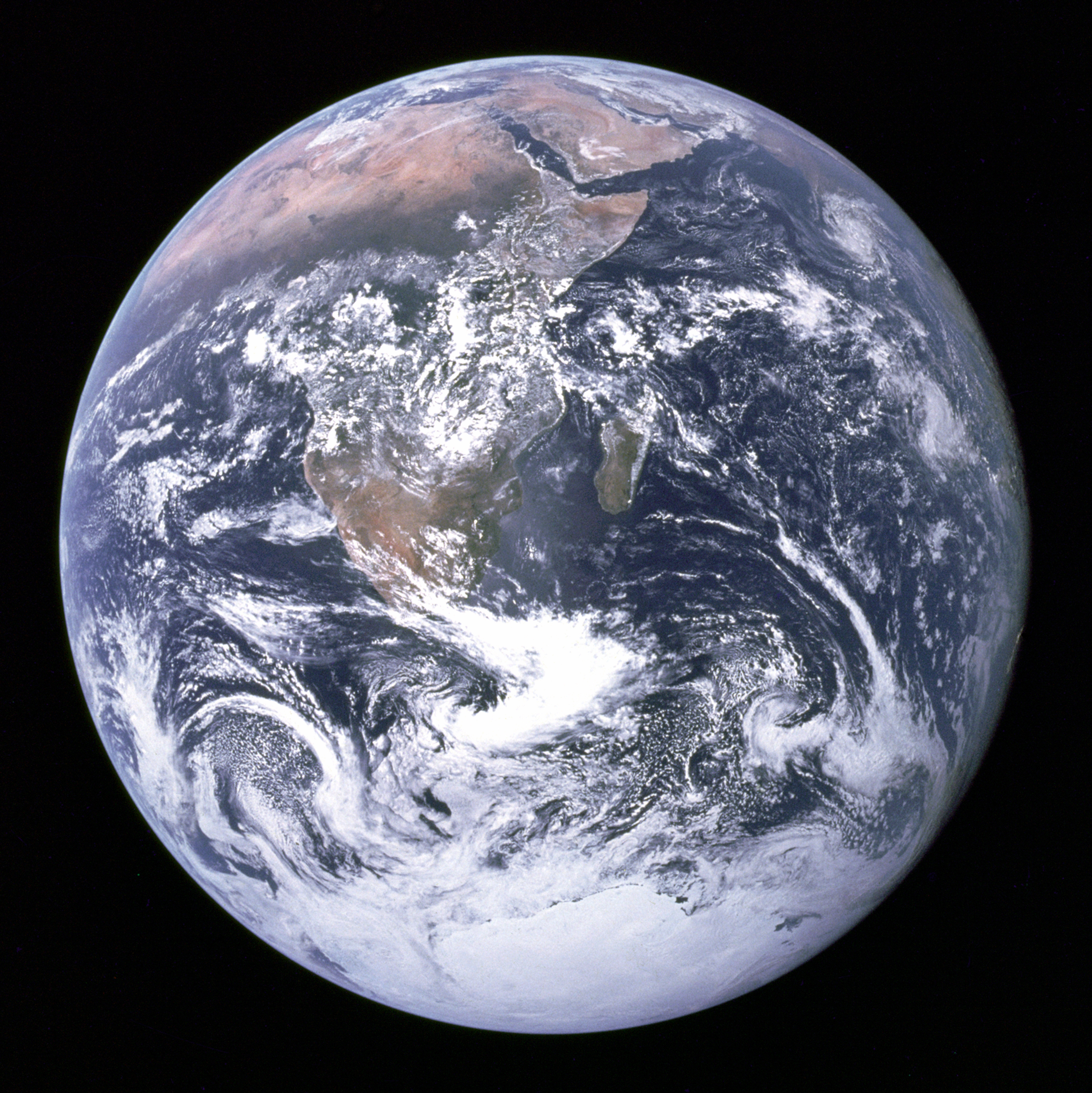 |
| The Blue Marble as seen from Apollo 17 |
Here are 10 Environmental Victories to encourage Earth Day celebrations the world over. And speaking of Earth Day, I'm currently taking an independent study course which focuses on Corporate Social Responsibility and Sustainability as it pertains to Business. Sustainability, after all, is the path which led me to pursue an MBA.
From my perspective this is not a paradox but a natural progression. As exemplified in an article I read for class, Beyond Greening: Strategies for a Sustainable World by Stuart L. Hart, the most effective strategy to bring about sustainable solutions is rooted in business. My summary of the article is as follows:
Summary of Beyond Greening: Strategies for a Sustainable World by Stuart L. Hart
The great challenge and opportunity of our time is to create a ‘Sustainable Global Economy,’ i.e. an economy which supports the planet indefinitely. As it stands now, we are meeting our needs by destroying the ability of future generations to meet their needs. Hart calls corporations “the only organizations with the resources, the technology, the global reach, and, ultimately, the motivation to achieve sustainability.”
‘Worlds in Collision’ is the summary view that Hart explains as the interdependence and soon to be colliding forces which create the major social and environmental problems we are now facing; the Market Economy, the Survival Economy, and Nature’s Economy. The resulting challenges include climate change, pollution, resource depletion, poverty, and inequality.
The Market Economy consists of commerce in developing nations and emerging economies alike. Some 17% (1 billion) of the world’s population falls within this affluent group and accounts for more than 75% of the world’s resources, leaving large ecological footprints. The Survival Economy includes the traditional, subsistence way of life in rural areas of developing countries. The approximately 3 billion people in this group meet their basic needs directly from nature. 90% of future population growth is expected to come from the Survival Economy. Nature’s Economy consists of the natural systems and resources that support the Market and Survival Economies, including renewable and nonrenewable resources.
Environmental burden is a function of population, affluence (consumption), and technology. But while population and consumption are societal issues, “technology is the business of business.” Further asserting Business’s role, Hart states “the responsibility for ensuring a sustainable world falls largely on the shoulders of the world’s enterprises, the economic engines of the future.”
Three stages of environmental strategy for a sustainable world include: Pollution Prevention (minimizing or eliminating waste before it is created); Product Stewardship (minimizing not only pollution from manufacturing but all environmental impacts associated with the full life cycle of a product); and Clean Technology (replacing existing product and process technologies with new, cleaner ones).
A sustainability vision is a plan for those companies striving to carry out the three stages of environmental strategy, directing how products, services, and processes will evolve while illuminating new competencies that will be required. Corporations can lead the way by helping to shape public policy and driving change in consumer’s behavior. Hart concludes that it makes good business sense for corporations to pursue strategies for a sustainable world.
The great challenge and opportunity of our time is to create a ‘Sustainable Global Economy,’ i.e. an economy which supports the planet indefinitely. As it stands now, we are meeting our needs by destroying the ability of future generations to meet their needs. Hart calls corporations “the only organizations with the resources, the technology, the global reach, and, ultimately, the motivation to achieve sustainability.”
‘Worlds in Collision’ is the summary view that Hart explains as the interdependence and soon to be colliding forces which create the major social and environmental problems we are now facing; the Market Economy, the Survival Economy, and Nature’s Economy. The resulting challenges include climate change, pollution, resource depletion, poverty, and inequality.
The Market Economy consists of commerce in developing nations and emerging economies alike. Some 17% (1 billion) of the world’s population falls within this affluent group and accounts for more than 75% of the world’s resources, leaving large ecological footprints. The Survival Economy includes the traditional, subsistence way of life in rural areas of developing countries. The approximately 3 billion people in this group meet their basic needs directly from nature. 90% of future population growth is expected to come from the Survival Economy. Nature’s Economy consists of the natural systems and resources that support the Market and Survival Economies, including renewable and nonrenewable resources.
Environmental burden is a function of population, affluence (consumption), and technology. But while population and consumption are societal issues, “technology is the business of business.” Further asserting Business’s role, Hart states “the responsibility for ensuring a sustainable world falls largely on the shoulders of the world’s enterprises, the economic engines of the future.”
Three stages of environmental strategy for a sustainable world include: Pollution Prevention (minimizing or eliminating waste before it is created); Product Stewardship (minimizing not only pollution from manufacturing but all environmental impacts associated with the full life cycle of a product); and Clean Technology (replacing existing product and process technologies with new, cleaner ones).
A sustainability vision is a plan for those companies striving to carry out the three stages of environmental strategy, directing how products, services, and processes will evolve while illuminating new competencies that will be required. Corporations can lead the way by helping to shape public policy and driving change in consumer’s behavior. Hart concludes that it makes good business sense for corporations to pursue strategies for a sustainable world.


