Freddie and his siblings flew the coop a few weekends ago. On Friday night, all four were in the nest. On Saturday morning, there was only one baby bird. By Saturday afternoon, there were none. Thus concludes our short stint as baby bird guardians. I wonder if bluebirds come back to where they were born to lay their eggs?
Just when I think the garden is winding down, my red bell pepper starts fruiting like crazy. I think this was caused by my pinching it back a few weeks ago, I was tired of it growing and growing without setting fruit. I hope there’s enough time for them to mature.
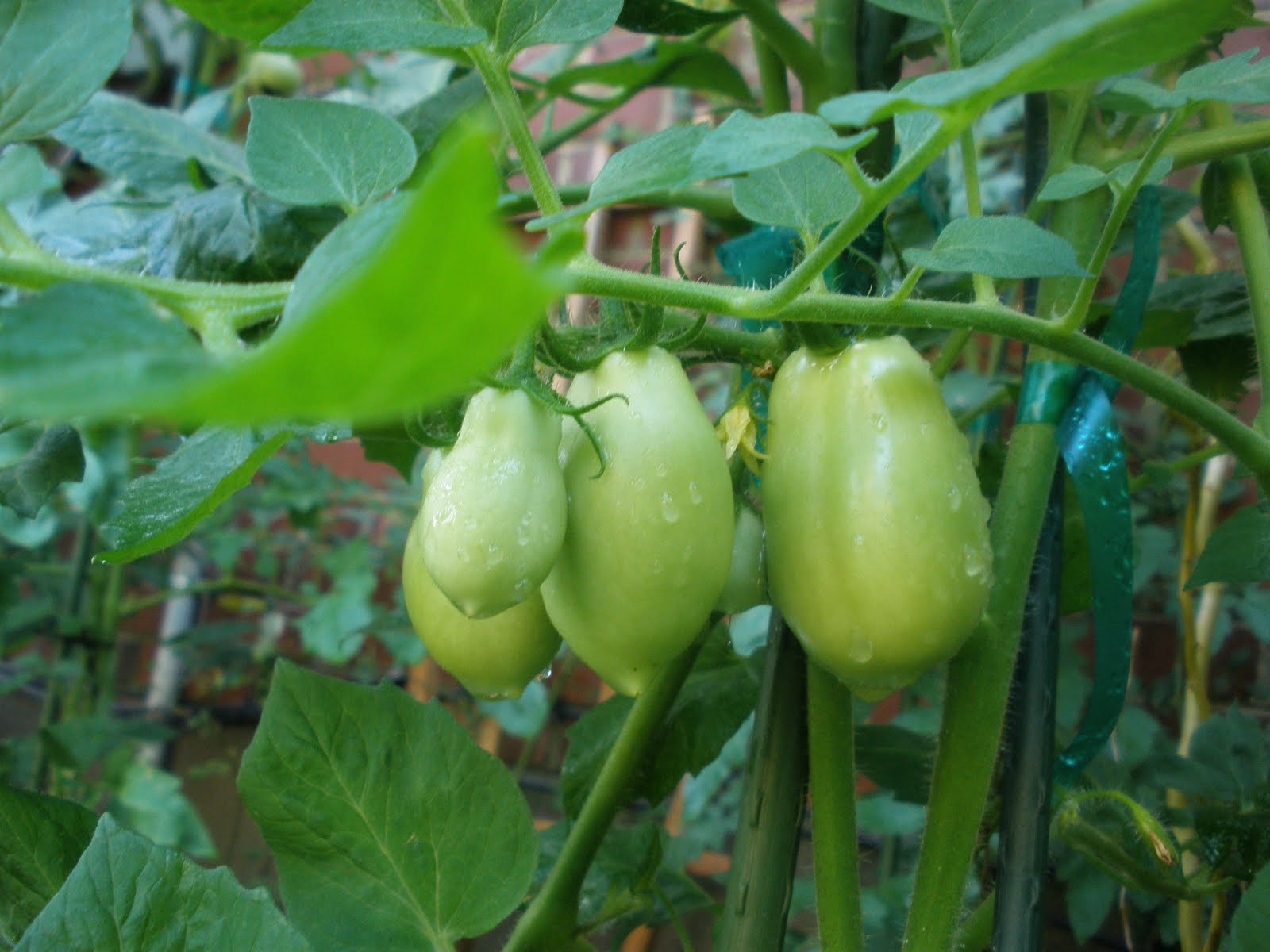
The ‘Black Cherry’ tomato is doing well and still producing lots of little tomatoes. The ‘Roma’, ‘Big Boy’, and ‘Mr. Stripey’ are still producing fruit, but it has been weeks since we were able to harvest a tomato (tomato thief). If they get close, I may just pull them off the vine early and let them ripen inside.
In the last big storm we had, the top of my large Butterfly Bush toppled over; so I had to cut it back and it looks a little unsightly. That hasn’t seemed to discourage any of the butterflies, luckily. I’ll have to do a better job of pruning this fall when I can really see its structure.
The Roses Of Sharon are completely hitting their stride now. At first I was disappointed in the lilac blooms; but now I’m overjoyed because I have three different colors at once. The white blooms which I love and remind me of my grandparents are now flowering alongside the lilac and pink blooming shrubs. It’s a beautiful palate of colors.
The Evening Primrose is STILL blooming, especially now that our evening temperatures are cooling off. That plant has got to be near the top of my “no maintenance required list.” Other no maintenance all-stars include the Oakleaf hydrangea and catmint that I have in the front beds and have basically neglected all season, but you’d never know!
Summer is definitely winding down. We’ve had a few evenings where temps dipped down into the low 60’s! I love the cooler weather, but I’m missing the long days of summer already. However, fall is one of my favorite times of the year; what with grilling out and college football, does sit get any better?
I’ve started reading ‘Omnivore’s Dilemma’, by Michael Pollan. This has been on my ‘plan to read’ list for sometime. I had read Pollan’s ‘Botany of Desire’ years ago and thoroughly enjoyed it. Despite the craze, I had put off reading ‘Omnivore’s Dilemma’, mainly because I thought it was an anti-meat eating campaign. So far though, the focus has been primarily on corn.
Turns out corn is in almost EVERYTHING: it feeds our livestock, fills our gas tanks, creates our processed foods, sweetens our sodas, and on and on and on. Corn and its cheap (government subsidized) products have a lot to do with our country's obesity and diabetes issues too. Not to mention our dependence on petroleum...
And while it’s not altogether new information, it has reminded me why it’s such a good idea to buy organic when possible. I prefer grass-fed beef (I felt like they were probably happier cows than feed-lot steer); but it wasn’t until reading this book that I was faced with the health and ecological consequences associated with the feed lots.
I’m finished with the first third of the book, having mostly to do with corn. The following are some of my notes from the book in the hopes that I may interest others in reading it. If you eat meat, shop in a grocery store, or have concerns about our reliance on fossil fuels, it’s a must read. Needless to say, I’ll be abstaining from chicken nuggets and reading more ingredient labels in the future!
Government subsidies acct for nearly half of an Iowa corn farmer’s income.
Without humans to plant corn every spring, modern corn would disappear from the earth in just a few years because it physically cannot reproduce on its own.
Fritz Haber, the “father of chemical warfare” discovered how to synthesize ammonia while working on dirty bombs for WWI. His discovery, which won him a Nobel Prize, allowed us to fix nitrogen to the soil and completely revolutionized our industrial food chain.
It takes more than a calorie of fossil fuels to produce a calorie of food in our industrialized agricultural food chain.
Cargill is the largest privately held corporation in the world; Cargill and ADM combine to purchase 1/3 of all American corn.
3/5 of our corn ends up on American factory farms, being eaten by primarily cows, who are not corn eaters by nature. Corn fed cows are problematic; this diet makes the cows sick, creates antibiotic and acid resistant bacteria, and creates a toxic waste dump of their feces.
1/5 of America’s petroleum consumption goes to producing and transporting our food.
From birth to slaughter (1200 pounds), a cow will consume the equivalent of 35 gallons of fuel, that’s a nearly a barrel.
1/10 of our corn crop ends up in our gas tanks.
The chicken nugget, invented in 1983 is the reason chicken has surpassed beef as America’s favorite meat.
Of the 38 ingredients in a chicken nugget, 13 can be derived from corn.
The most alarming chicken nugget ingredient: TBHQ; this toxic preservative is derived from petroleum and is a suspected carcinogen and known mutagen, tumorigen, and reproductive effector.
photo credit