Showing posts with label sustainability. Show all posts

Tuesday, April 22, 2014

Earth Day 2014

Happy Earth Day Everyone! 
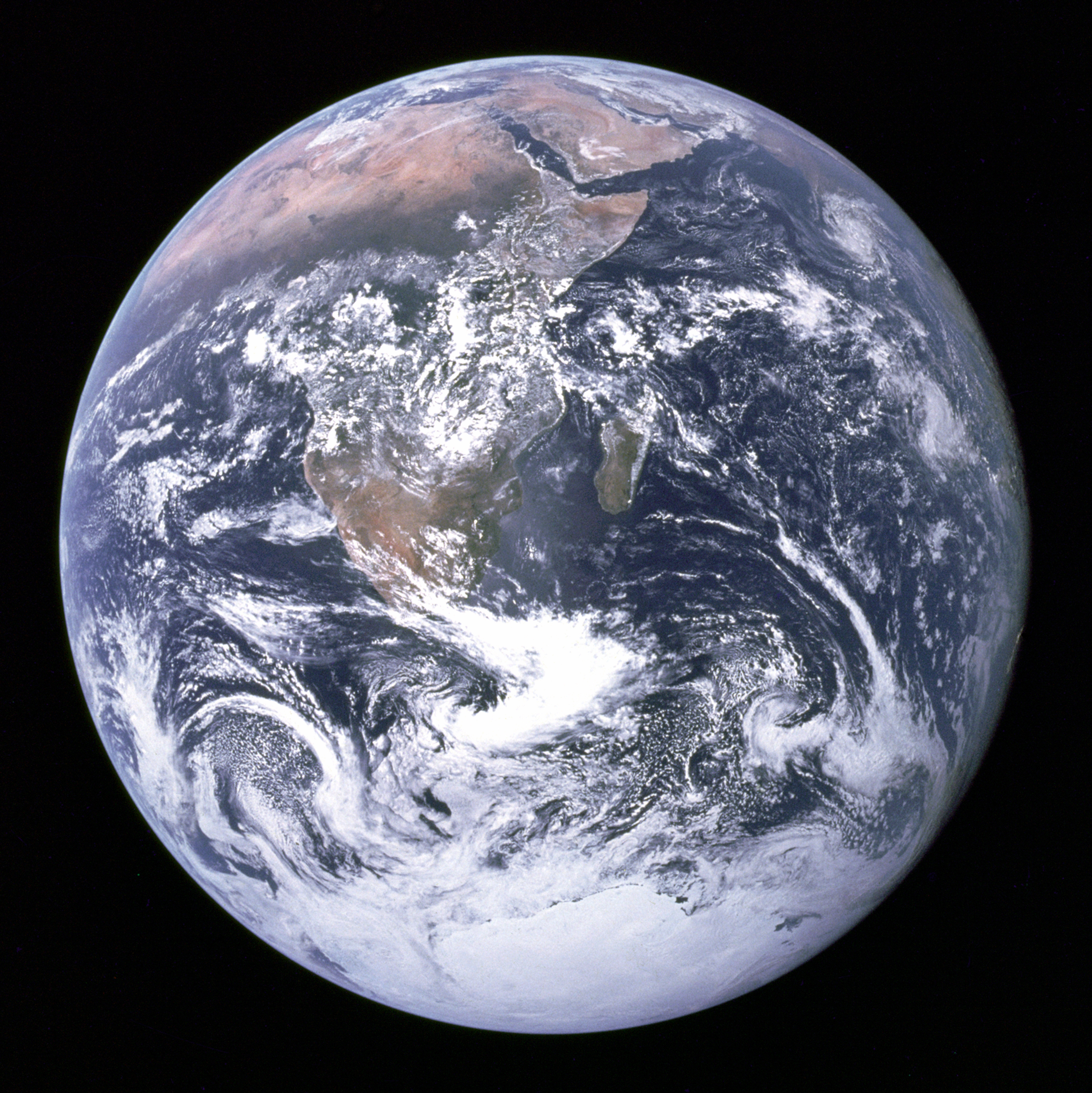
The Blue Marble as seen from Apollo 17


Here are 10 Environmental Victories to encourage Earth Day celebrations the world over. And speaking of Earth Day, I'm currently taking an independent study course which focuses on Corporate Social Responsibility and Sustainability as it pertains to Business. Sustainability, after all, is the path which led me to pursue an MBA. 

From my perspective this is not a paradox but a natural progression. As exemplified in an article I read for class, Beyond Greening: Strategies for a Sustainable World by Stuart L. Hart, the most effective strategy to bring about sustainable solutions is rooted in business. My summary of the article is as follows:

Summary of Beyond Greening: Strategies for a Sustainable World by Stuart L. Hart

The great challenge and opportunity of our time is to create a ‘Sustainable Global Economy,’ i.e. an economy which supports the planet indefinitely. As it stands now, we are meeting our needs by destroying the ability of future generations to meet their needs. Hart calls corporations “the only organizations with the resources, the technology, the global reach, and, ultimately, the motivation to achieve sustainability.”

‘Worlds in Collision’ is the summary view that Hart explains as the interdependence and soon to be colliding forces which create the major social and environmental problems we are now facing; the Market Economy, the Survival Economy, and Nature’s Economy. The resulting challenges include climate change, pollution, resource depletion, poverty, and inequality. 

The Market Economy consists of commerce in developing nations and emerging economies alike. Some 17% (1 billion) of the world’s population falls within this affluent group and accounts for more than 75% of the world’s resources, leaving large ecological footprints. The Survival Economy includes the traditional, subsistence way of life in rural areas of developing countries. The approximately 3 billion people in this group meet their basic needs directly from nature. 90% of future population growth is expected to come from the Survival Economy. Nature’s Economy consists of the natural systems and resources that support the Market and Survival Economies, including renewable and nonrenewable resources. 

Environmental burden is a function of population, affluence (consumption), and technology. But while population and consumption are societal issues, “technology is the business of business.” Further asserting Business’s role, Hart states “the responsibility for ensuring a sustainable world falls largely on the shoulders of the world’s enterprises, the economic engines of the future.”

Three stages of environmental strategy for a sustainable world include: Pollution Prevention (minimizing or eliminating waste before it is created); Product Stewardship (minimizing not only pollution from manufacturing but all environmental impacts associated with the full life cycle of a product); and Clean Technology (replacing existing product and process technologies with new, cleaner ones).

A sustainability vision is a plan for those companies striving to carry out the three stages of environmental strategy, directing how products, services, and processes will evolve while illuminating new competencies that will be required. Corporations can lead the way by helping to shape public policy and driving change in consumer’s behavior. Hart concludes that it makes good business sense for corporations to pursue strategies for a sustainable world.

Tuesday, March 12, 2013

my new job: Lawn Technician


On account of my ever decreasing discretionary funds, I have fired my lawn guy and hired myself. For the cost of approximately one month of lawn care, I have purchased a 16” reel lawn mower to use throughout the season. The Greenworks brand is well-reviewed and the 16” size seems perfect for me, at about 26 pounds.

The only maintenance I foresee is sharpening the blades, which many online have called an “enjoyable activity.” While this will be a new time commitment on my part, I will be burning more calories and reducing my carbon footprint. (Previous lawn maintenance technician used a gas-powered riding lawn mower and gas-guzzling trimmer.) I particularly enjoy that Greenworks has categorized their reel mowers as "human" powered on their website. 

Thanks to Amazon, I will have my new human-powered mower this week. And should the weather be enjoyable Saturday, I will have a go at cutting my lawn myself! (Among other needed landscape chores.) I cannot wait for spring, happy gardening ya’ll!

Friday, November 16, 2012

Emerald Cities


Joan Fitzgerald’s Emerald Cities takes a look at how cities are leading the way toward more sustainable economic development. As the book was published at the start of the recession, many of the optimistic programs described have surely not fulfilled their goals. But the plans, policies, and organizations illustrated throughout Fitzgerald’s book are a good road map for urban planners, policy makers, and entrepreneurs alike.

America seems to have dropped the proverbial ball when it comes to global environmental leadership, action, and production. While our most progressive state (environmentally, anyway), California, has a 2020 goal of reducing greenhouse gases by 25%, Sweden will be oil-independent by then. Additionally, manufacturing of solar panel and wind turbine components has been spearheaded largely by European countries, and now China; so much for our own rust-belt revitalization.

Even still, many of the international examples of appropriate environmental policy are achieving mixed results. For instance, Germany produces 14% of its energy from renewables; however, Germany’s energy import dependence is at 62% and growing. As of 2010, 26 new coal-fired plants were being built in Germany, which would offset any carbon dioxide savings from solar and wind expansion.

Public policy has enormous potential to impact our environment and our economy. Adopting a Renewable Portfolio Standard (RPS), or a Renewable Electricity Standard (RES) will require increased production of energy from renewable sources. As of 2012, 30 U.S. States have implementedthese types of mechanisms and 7 more have voluntary goals. Tennessee and most of the southeast are not among those forward thinking states.

Currently, it is illegal for utility companies to buy back power from customers in most municipalities. By changing these laws, homeowners are incentivized to make “green” upgrades, and RPS’s become easier to attain. Presently, “green” upgrades are not given credit through traditional appraisals. California has passed a law that forces sellers to disclose energy efficiency, providing a means to compare and reward efficiency.

Nearly 40% of greenhouse gas emissions come from buildings (twice the amount from the transportation sector) and 50% of building energy comes from coal, the dirtiest of fossil fuels. The Cambridge Energy Alliance, a non-profit organization, and Berkley FIRST, a local government initiative, are two possible means to the same end: energy efficient buildings.

The Cambridge Energy Alliance is a non-profit created to implement an initiative seeking to retrofit half of all existing buildings in 5-7 years. (This would only reduce greenhouse gas emissions by 10%, according to 2010 statistics.) With $500k in seed money, from local foundations and institutional investors, Cambridge Energy Alliance works through local utilities to hire auditors that make recommendations and complete the work.

The audits are “free” to customers, through a system-wide charge to all consumers. The revolving fund would offer low interest loans for retrofits, to be paid back through lower utility bills. Unfortunately, the Cambridge Alliance had much difficulty maintaining the revolving fund through the recent economic downturn.

Berkley FIRST is a program designed to encourage the use of solar with a self-financing system. The city sends an approved solar installer to evaluate and install the appropriate solar system, for which homeowner pays no money up-front. When the owner signs the contract, the city pays for the system and adds the cost to the property tax bill, which is repaid over time. The Berkley FIRST special tax is a lien on the property that ranks above the first mortgage.

The increase in property tax is roughly netted out by energy bill savings. In addition, there are rebates and federal tax credits available. The homeowner will break even until the cost of installation is amortized over 20 years, at which point the homeowner will reap permanent savings on their energy bill. This approach does not require tapping into home equity for credit, and the city’s initial costs were financed by the sale of bonds.

Job growth potential is great in renewable energy component manufacturing and in the skilled labor required to install “green” retrofits. The mutually dependent relationship between sustainability and the business community cannot be ignored; also important are government policies to encourage “green” action. According to Fitzgerald, the three E’s (Economy, Ecology, and Equity) are essential to societal sustainability:

This book is rich with examples of how cities and organizations are tackling a multitude of environmental issues (too many to discuss in this blog) such as transportation, recycling, waste disposal, and social justice (as related to the environment.) Emerald Cities connects the dots between environment, industry, policy, and business in a way that is personally inspiring. Environmental solutions that are based in business-growth policies will be more appealing to all involved.

In conclusion, two quotes from the text: “Renewable energy, energy efficiency, green building, recycling, waste reduction, fewer cars, more trains, walking, biking are not individual policies but parts of the whole of how cities must be transformed.” And, “A considerable amount of policy, investment, and planning will have to take place to realize a vision that links transportation, sustainability, economic development, and social justice.” Amen.

Thursday, November 8, 2012

{carbon nation}


In the process of surveying future career shifts and educational goals, I've spent the last several months searching out books and films about environmental issues and their solutions. Carbon Nation is a documentary film by Peter Byck about the growing worldwide carbon footprint. Instead of getting bogged down in the discussion about what is causing the problem, this film discusses solutions to meet our worldwide energy needs through lower carbon, carbon neutral, and renewable means.

Carbon Nation feels like an unbiased, all-encompassing look at sustainable energy practices. For instance, included in the discussion is the Evangelical Climate Initiative as well as interviews with renewable energy advocates who do not believe in climate change. The point the movie makes is that in the end, how we got here does not matter. We all need to work together to protect our environment and way of life.

One thing about wind power I didn’t realize before watching the film is that the land used for wind turbines can still be utilized for farming and ranching, which seems like a good business strategy for struggling farmers in the nation’s bread basket. Also, the Department of Energy has estimated that the wind potential in Texas, the Dakotas, Montana, and Kansas exceeds current energy needs in the US.

Another surprise for me was that deforestation accounts for 20% of the world’s carbon emissions, which is larger than the portion attributed to all transportation sectors. In addition to loss of biomass, soil erosion leads to other environmental impacts. If farmers and landowners of developing countries could be persuaded to harvest their forests in a sustainable way, and set aside land for grazing and Eco tourism, new sources of income could be tapped while protecting the environment.

Carbon Nation is full of ideas to meet the world’s energy needs in a renewable and environmentally friendly way. The film is upbeat and approachable, no matter your political or ideological views, which serves as a stark contrast to other environmental films such as An Inconvenient Truth. I highly recommend Carbon Nation if you have an interest in the environment, energy, or if you like Bill Kurtis’ voice (he’s the narrator).