Showing posts with label books. Show all posts

Monday, August 13, 2012

American Grown


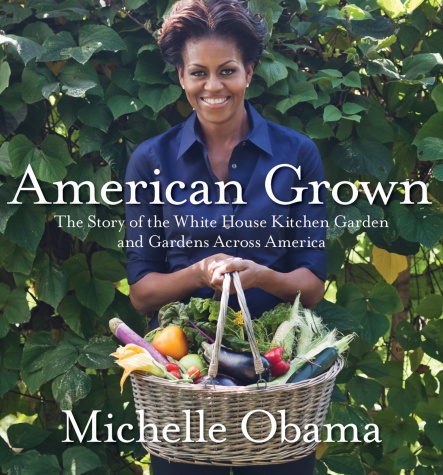
Today I read Michelle Obama’s book American Grown; The Storyof the White House Kitchen Garden and Gardens Across America. It is a good American garden history and service garden philosophy primer. Michelle Obama has made healthy eating and healthy lifestyles the center-piece of her public policy efforts and this book showcases both.

It was interesting to hear how former Presidents and first ladies made their mark on the White House grounds. In addition, the discussion about where to site the new kitchen garden and what to plant is appreciated by this gardener (and designer); as these considerations are oft-overlooked.

The subjects and their presentation are worthwhile to novice and master gardener alike. My favorite portion of the book introduced the White House’s first beehive and beekeeper. The honey is also part of gift baskets that contain pickled vegetables, loose tea, and seedlings from the garden given to foreign dignitaries such as Prince Charles.

Aside from White House history and bees, American Grown also shares gardens plans, tons of images, personal stories, and recipes inspired by the garden and White House chefs. Other areas of focus include community gardens, service gardens, farmer’s markets, school gardens, and the ‘Let’sMove!’ program.

I would recommend this book for anyone interested in gardening, history, or Michelle Obama; never have I seen a more stylishly-dressed gardener getting their hands dirty. Two other reasons to read this book:  Michelle Obama’s initiatives are ones we should all support for our country’s health, and author proceeds from this book will support the National Park Foundation

Thursday, September 8, 2011

Pop Culture meets Horticulture: reason’s Madonna should love, not loathe, hydrangeas…

Pop culture comes up in the world of horticulture and landscape architecture about as often as Madonna injects herself into that world, or hardly ever. This week we all learned of Madonna’s contempt for Hydrangeas, as seen in this viral YouTube video. But if Madge would take the time to see how similar the maligned flower is to her chameleon-self, she may actually come to appreciate this long-loved garden treasure.

A top-selling shrub, hydrangeas are extremely versatile, thriving in sun or shade with appropriate moisture. The more refined of the two most popular Hydrangea species is the Bigleaf Hydrangea (H. macrophylla) which can be found in hortensia (mop-head) or lacecap varieties. These pink and blue hydrangeas bloom on new wood and can change color over time in relation to the soil pH (acid=blue, alkaline=pink); ‘Nikko Blue’ is a popular Bigleaf variety.

The Oakleaf Hydrangea (H. quercifolia) has coarser textured leaves, can grow much larger (up to 8’ tall and wide) and has considerable fall color. Typically, Oakleaf blooms develop a pink hue with age. ‘Snow Queen’ is a popular Oakleaf Hydrangea variety, all of which bloom on old wood. A good rule of thumb is to prune all Hydrangea varieties directly after flowering; they make fantastic cut and dried flowers for arrangements.

There are more than a handful of species outlined in Dr. Dirr’s Hydrangeas for American Gardens, and that is a wonderful resource to learn more about them and their care. To be sure, there is a Hydrangea for every gardener and landscape architect regardless of sun exposure, hardiness zone, and design style much in the same way there is a Madonna album or phase we can each remember fondly and relate to.

As Madonna revives her image and career time and again, Hydrangeas continue to appeal to new gardeners taking shape as vines, shrubs, small trees, and even perennials. Indeed, they are the ‘Madonnas’ of the woody plant world, constantly being reinvented and always in the spotlight. Hopefully both the flower and the pop-diva will interest us for generations to come.

Wednesday, August 31, 2011

Blue mistflower: one of my favorites

Eupatorium coelestinum, blue mistflower, oh how I love you. You are unassuming, don’t ask for much, and yet you bloom for months on end. Your assertive nature is endearing and your lavender blue flowers look great with everything!

This plant is truly one of my favorite native perennials. When you see it in action on a hot August afternoon, it’s easy to understand why. This plant flourishes at a time of year when many perennials start to look weary.

In his revised ‘Garden Perennials’ Allan Armitage calls this Eupatorium “A terrific weed, much more tolerant of heat than most other members of the genus.” This cousin of the well-known Joe-Pye Weed grows about 2' tall and blooms summer through fall.

A word of warning, this plant is assertive (not aggressive). I’ve seen it spread by runners as well as by seed; new plants will pop up across gardens and driveways alike. While easy to weed, this is something to consider before planting.

Blue mistflower is a terrific bedding plant and does well in containers too. It is the perfect compliment to Sedona Coleus, Verbena bonariensis, and Sweet potato vine as shown in the above image. And if you can’t find any to purchase, I have some to share!

Wednesday, September 8, 2010

corn, corn, everywhere, but not a kernel to eat


Freddie and his siblings flew the coop a few weekends ago. On Friday night, all four were in the nest. On Saturday morning, there was only one baby bird. By Saturday afternoon, there were none. Thus concludes our short stint as baby bird guardians. I wonder if bluebirds come back to where they were born to lay their eggs?

Just when I think the garden is winding down, my red bell pepper starts fruiting like crazy. I think this was caused by my pinching it back a few weeks ago, I was tired of it growing and growing without setting fruit. I hope there’s enough time for them to mature.

The ‘Black Cherry’ tomato is doing well and still producing lots of little tomatoes. The ‘Roma’, ‘Big Boy’, and ‘Mr. Stripey’ are still producing fruit, but it has been weeks since we were able to harvest a tomato (tomato thief). If they get close, I may just pull them off the vine early and let them ripen inside.

In the last big storm we had, the top of my large Butterfly Bush toppled over; so I had to cut it back and it looks a little unsightly. That hasn’t seemed to discourage any of the butterflies, luckily. I’ll have to do a better job of pruning this fall when I can really see its structure.

The Roses Of Sharon are completely hitting their stride now. At first I was disappointed in the lilac blooms; but now I’m overjoyed because I have three different colors at once. The white blooms which I love and remind me of my grandparents are now flowering alongside the lilac and pink blooming shrubs. It’s a beautiful palate of colors.

The Evening Primrose is STILL blooming, especially now that our evening temperatures are cooling off. That plant has got to be near the top of my “no maintenance required list.” Other no maintenance all-stars include the Oakleaf hydrangea and catmint that I have in the front beds and have basically neglected all season, but you’d never know!

Summer is definitely winding down. We’ve had a few evenings where temps dipped down into the low 60’s! I love the cooler weather, but I’m missing the long days of summer already. However, fall is one of my favorite times of the year; what with grilling out and college football, does sit get any better?

I’ve started reading ‘Omnivore’s Dilemma’, by Michael Pollan. This has been on my ‘plan to read’ list for sometime. I had read Pollan’s ‘Botany of Desire’ years ago and thoroughly enjoyed it. Despite the craze, I had put off reading ‘Omnivore’s Dilemma’, mainly because I thought it was an anti-meat eating campaign. So far though, the focus has been primarily on corn.

Turns out corn is in almost EVERYTHING: it feeds our livestock, fills our gas tanks, creates our processed foods, sweetens our sodas, and on and on and on. Corn and its cheap (government subsidized) products have a lot to do with our country's obesity and diabetes issues too. Not to mention our dependence on petroleum...

And while it’s not altogether new information, it has reminded me why it’s such a good idea to buy organic when possible. I prefer grass-fed beef (I felt like they were probably happier cows than feed-lot steer); but it wasn’t until reading this book that I was faced with the health and ecological consequences associated with the feed lots.

I’m finished with the first third of the book, having mostly to do with corn. The following are some of my notes from the book in the hopes that I may interest others in reading it. If you eat meat, shop in a grocery store, or have concerns about our reliance on fossil fuels, it’s a must read. Needless to say, I’ll be abstaining from chicken nuggets and reading more ingredient labels in the future!

 Government subsidies acct for nearly half of an Iowa corn farmer’s income.
 Without humans to plant corn every spring, modern corn would disappear from the earth in just a few years because it physically cannot reproduce on its own.
 Fritz Haber, the “father of chemical warfare” discovered how to synthesize ammonia while working on dirty bombs for WWI. His discovery, which won him a Nobel Prize, allowed us to fix nitrogen to the soil and completely revolutionized our industrial food chain.
 It takes more than a calorie of fossil fuels to produce a calorie of food in our industrialized agricultural food chain.
 Cargill is the largest privately held corporation in the world; Cargill and ADM combine to purchase 1/3 of all American corn.
 3/5 of our corn ends up on American factory farms, being eaten by primarily cows, who are not corn eaters by nature. Corn fed cows are problematic; this diet makes the cows sick, creates antibiotic and acid resistant bacteria, and creates a toxic waste dump of their feces.
 1/5 of America’s petroleum consumption goes to producing and transporting our food.
 From birth to slaughter (1200 pounds), a cow will consume the equivalent of 35 gallons of fuel, that’s a nearly a barrel.
 1/10 of our corn crop ends up in our gas tanks.
 The chicken nugget, invented in 1983 is the reason chicken has surpassed beef as America’s favorite meat.
 Of the 38 ingredients in a chicken nugget, 13 can be derived from corn.
 The most alarming chicken nugget ingredient: TBHQ; this toxic preservative is derived from petroleum and is a suspected carcinogen and known mutagen, tumorigen, and reproductive effector.


photo credit

Wednesday, July 28, 2010

reap what you sow


This image is the bloom from a Rose of Sharon that seeded itself next to my deck in the back of my house. It was a pleasant surprise and a welcome ‘Good Morning’ from the garden when I let the dog out this morning.

Recently, I have been reading the book ‘grace from the garden: changing the world one garden at a time’, written by Debra Landwehr Engle. It’s full of inspirational gardening stories and I highly recommend it. In one of the last chapters of the book, I read the following garden poem:

for the garden of your daily living:
plant three rows of peas,
1. peas of mind
2. peas of heart
3. peas of soul

plant four rows of squash,
1. squash gossip
2. squash indifference
3. squash grumbling
4. squash selfishness

plant four rows of lettuce:
1. lettuce be faithful
2. lettuce be kind
3. lettuce be patient
4. lettuce really love one another

no garden is without turnips,
1. turnip for meetings
2. turnip for service
3. turnip to help one another

to conclude our garden, we must have thyme.
1. thyme for each other
2. thyme for family
3. thyme for friends

water freely with patience and cultivate with love. there is much fruit in your garden because you reap what you sow.

Tuesday, July 13, 2010

le jardin de pizza


It has been 3 weeks since my last blog post and all I can say is I’ve been busy; and so has my garden. Last night we made a pizza using homegrown Roma tomatoes, basil, and bell peppers. It was so delicious, it has inspired this ‘pizza garden’ blog!

Part of the reason I have been too busy to blog was that I read 'My Life in France' in record time for my first book club meeting. Julia Child's book was absolutely delightful in every way; I felt as though I was travelling and eating all over France with her, ergo the blog's title. [Pizza, however, was not a part of her French culinary escapades.]

Pizza gardens are gardens that simply contain the ingredients one may want to put on a pizza. Looking into it, I found that ‘pizza gardens’ all usually contain at least tomatoes and basil. The rest of the ingredients/plants could include sweet peppers, hot peppers, oregano, onions, parsley, eggplant, scallions, rosemary, jalapeƱos, cilantro, spinach, etc.

This theme could be wildly popular with kids too; picture a raised vegetable/herb garden actually in the shape of a pizza pie, with dividers made to look like ‘slices’ of pizza! It was a lot of fun enjoying the ‘fruits’ of my vegetable garden labor. And as the Roma’s continue to ripen and the garden yields more peppers, I hope to try another pizza soon!

There are ‘Black Cherry’ tomatoes ripening everyday, from the bottom of the plant upward. That tomato plant is now almost 7’ tall. I also harvested my first ‘Big Boy’ tomato over the weekend and will be trying that soon. ‘Big Boy’ only has a few more tomatoes ripening so I’m a little disappointed in its yield.

‘Mr. Stripey’ has yet to produce any fruit, but I am hopeful as it continues to grow and flower. The other no-name tomatoes are still growing, but remain fruitless as well. The jalapeƱo plant is producing lots, though I have yet to actually try one. And the red bell pepper is growing like a weed, but hasn’t set fruit yet.

The Black-eyed Susan’s are blooming profusely, and look great next to the sedums which are finally flowering. The butterfly bush and Verbena are flowering nicely as well. Although I was surprised that the butterfly bush I relocated across the drive has a lighter bloom color, almost a soft pink/purple as opposed to the lilac of the parent plant.

The Rose of Sharon are starting to bloom more, but are darker in color than I was expecting. Now, the blooms are lilac with a darker, magenta eye. The hollyhocks have completely petered out and I see no signs of seed pods so I’ll be cutting them all back soon.

The mint is almost taking over that planting bed, but it is nice to smell. The evening primrose is still blooming, and its fragrance is light and lovely in the evenings. We’ve received plenty of rain lately, so I’ve been able to cut back on watering. Also, our mid-to-upper 90 degree days have cooled slightly. Until next time, happy gardening!

the image used above is not my creation, instead i found it here.