Thursday, September 20, 2012

end of summer


It's the end of summer and I'm taking stock of the garden and planning fall projects. This year I have really enjoyed growing new things, like banana peppers, and trying new things, like making pickles. Between what I've grown, generous friends, and my CSA, I know I'm eating healthier and more sustainably than ever before.

I'm about to throw the towel in on my tomatoes and get that space ready for a winter veggie garden. My peppers, especially the jalapenos are still producing, which will make a nice addition to this weekend's chili. In the upper south, right now is a great time to aerate and over-seed your lawn too. And while most irrigating can be cut back this time of year, newly-seeded lawns should be sprinkled twice daily (e.g., 4am and 4pm).

Today I collected almost 50 Chinkapin Oak acorns in a matter of minutes. Potential fall projects I have in mind are: germinate the acorns and make baby oak trees, become an urban forager and prepare them for consumption, or most likely some combination of the two. I will undoubtedly report successes/ failures here.

Until then, happy foraging/gardening!

Wednesday, September 5, 2012

Beautyberry


American Beautyberry
Recently I confirmed a suspicion of mine, Japanese Beautyberry (Callicarpa japonica) is an invasive exotic. A landscaper had mistakenly installed a few of these shrubs for a client one winter, to replace some dead shrubs in a grouping of American Beautyberry (Callicarpa americana); now there are seedlings of Japanese Beautyberry growing in nearby planting beds.

Observing these two species side by side it is easy for me to choose a favorite. The American Beautyberry has medium-green, medium-textured foliage with rich-colored violet-magenta fruit clusters that surround stem nodes of gracefully arching branches. This shrub is perfect for massing between turf and wooded areas and in the naturalized border. The fruit is not a favorite among wildlife, but will be gobbled up before winter. I have never seen this species re-seed itself.

Japanese Beautyberry
The Japanese Beautyberry by contrast has yellowish-green foliage of a slightly finer texture and more coolly-colored purple fruit on arched branches that have a more erratic structure. The flowering and fruiting cycle of the two species is similar, and I would imagine the flowers and fruit are similarly attractive to pollinators and wildlife alike. Japanese Beautyberry grows faster, but both species can benefit from pruning to within 6”of the ground each spring as they bloom on new growth.

There is an abundance of information (and misinformation) on-line about the many Beautyberry species, some of which have been classified as invasive (Callicarpa dichotoma). Jam recipes were surprisingly popular, which proves the point that when you add enough sugar to anything, it will be edible! Fall is the time to enjoy this shrub. And this fall, I will appreciate the native species even more.

Monday, August 13, 2012

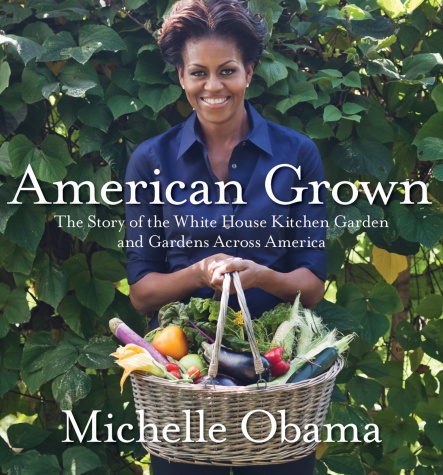
American Grown


Today I read Michelle Obama’s book American Grown; The Storyof the White House Kitchen Garden and Gardens Across America. It is a good American garden history and service garden philosophy primer. Michelle Obama has made healthy eating and healthy lifestyles the center-piece of her public policy efforts and this book showcases both.

It was interesting to hear how former Presidents and first ladies made their mark on the White House grounds. In addition, the discussion about where to site the new kitchen garden and what to plant is appreciated by this gardener (and designer); as these considerations are oft-overlooked.

The subjects and their presentation are worthwhile to novice and master gardener alike. My favorite portion of the book introduced the White House’s first beehive and beekeeper. The honey is also part of gift baskets that contain pickled vegetables, loose tea, and seedlings from the garden given to foreign dignitaries such as Prince Charles.

Aside from White House history and bees, American Grown also shares gardens plans, tons of images, personal stories, and recipes inspired by the garden and White House chefs. Other areas of focus include community gardens, service gardens, farmer’s markets, school gardens, and the ‘Let’sMove!’ program.

I would recommend this book for anyone interested in gardening, history, or Michelle Obama; never have I seen a more stylishly-dressed gardener getting their hands dirty. Two other reasons to read this book:  Michelle Obama’s initiatives are ones we should all support for our country’s health, and author proceeds from this book will support the National Park Foundation